
The night in the camp was fine with all the modern technology, namely the electric blankets. Still it took us a few minutes to warm up under the blankets. So far, altitude sickness had not bothered me yet. So I hoped I would be fine tomorrow as we ascended to a new altitude.
In the middle of the night, both of us woke up because it was burning under the blankets!! The blankets turned so hot that we had to switch them off for a bit. Before we went to sleep, Todd suggested we should go out at the second half of the night to check out the Milky Way because how often would we get to be at this altitude? I happily accepted his suggestion. However, when it was the perfect time to go out to check the starry sky, we were defeated by the idea of leaving our warm (actually super-hot) bed and bundling up to check out the stars. So we swiftly achieved a mutual agreement that we would stay in.
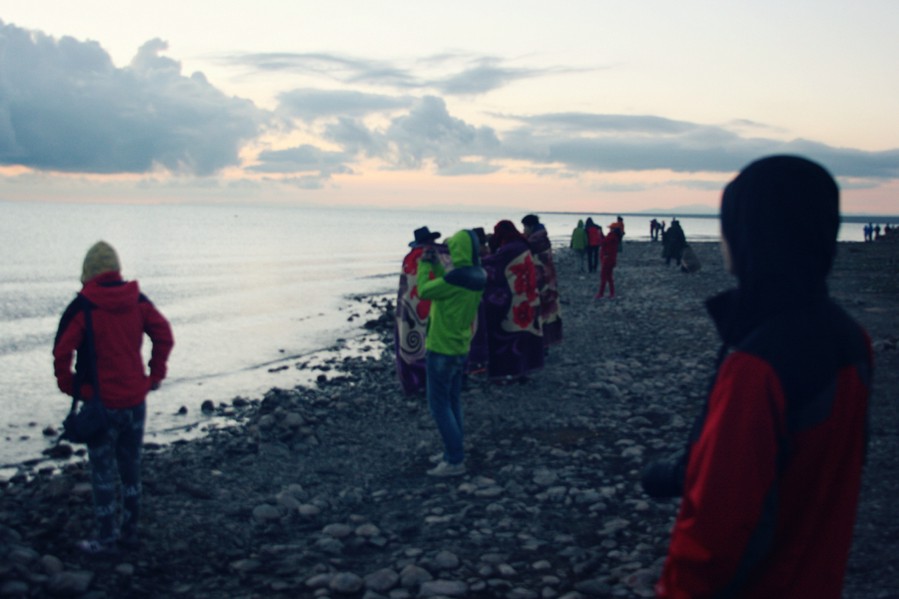
The second morning at dawn, we got up and hurried to the lakeside for the sunrise. It was freezing cold! I could only wished that I had taken the blanket with us as many of other people did.
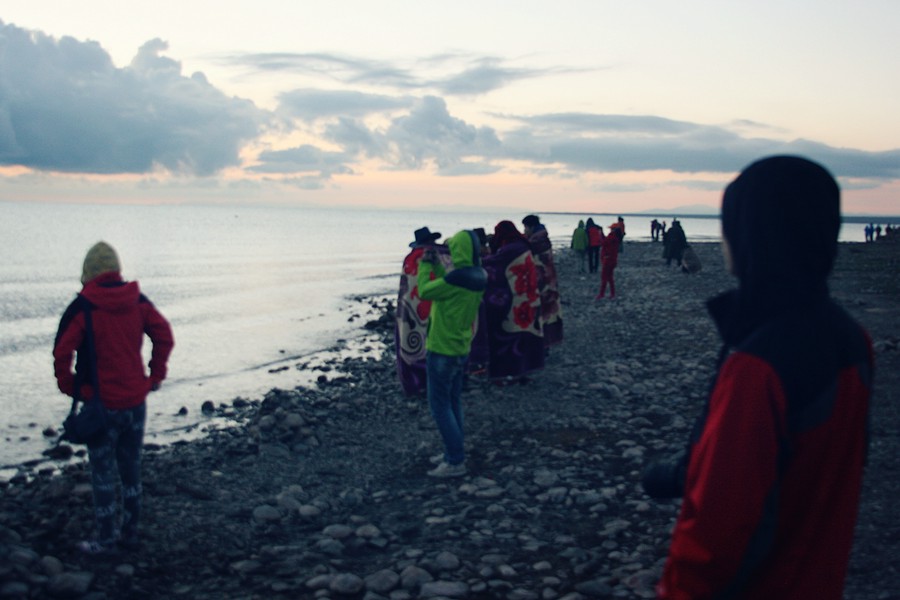
Those Smart People!
It was a bit cloudy, so the chance for us to have a good view of the sunrise was slim. I couldn’t help noticing the many piles of rocks on the bank of the lake. Looked like someone had created many tiny rock mountains along the bank.
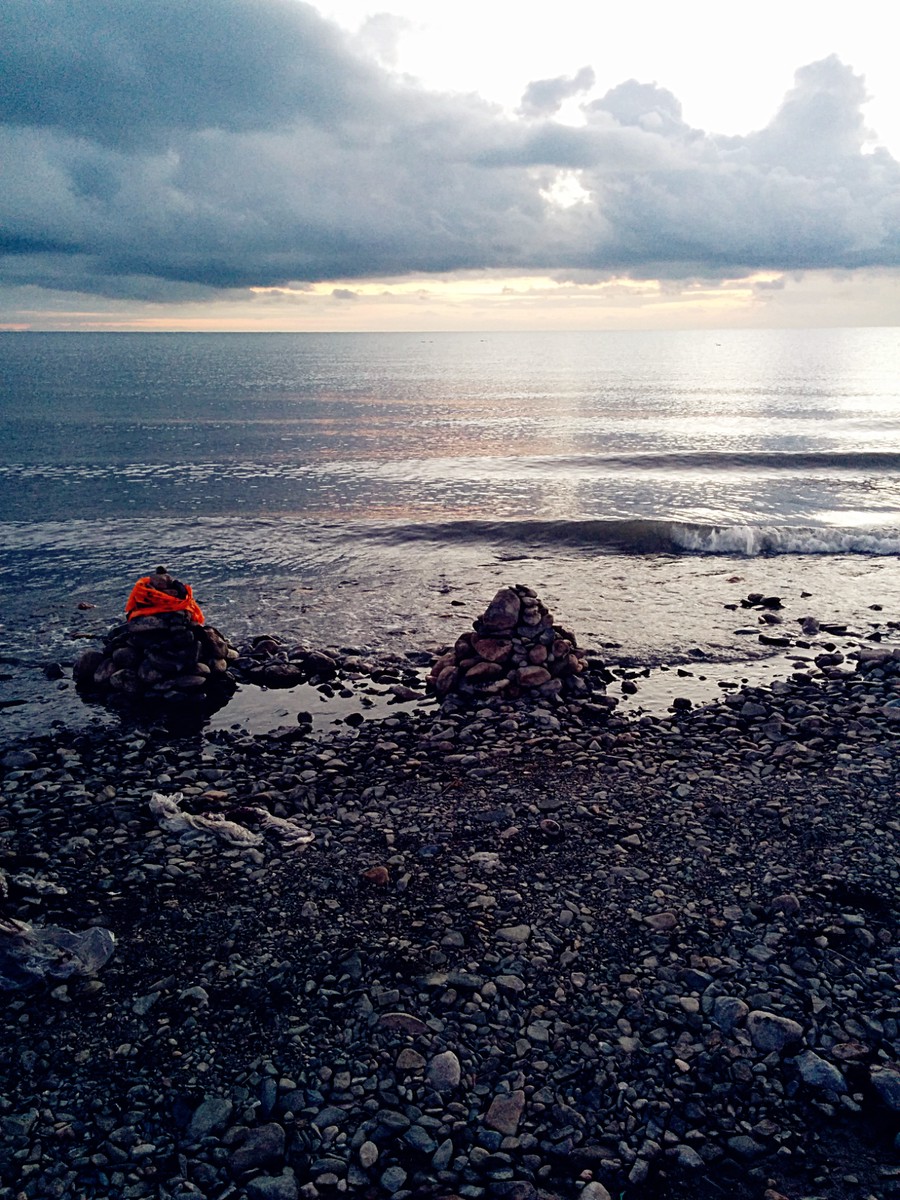
The Rock Piles
Later on I checked with our tour guide in Tibet who said the locals believed that the souls of the deceased would rest at the rock piles. After half an hour, we finally saw a red dot showing up from the distant horizon.

The Sunrise
Though neither as beautiful nor as magnificent as I had imagined, the sunrise was still impressive in a special way.
After the pilgrimage ceremony by the lake, we headed back to our tent and waited for another one and a half hours before we actually hit the road. Of course, smart as you are, you definitely know what I did in the tent during this time. Yuppers, I napped!!
Along the road, any random snaps were picturesque.
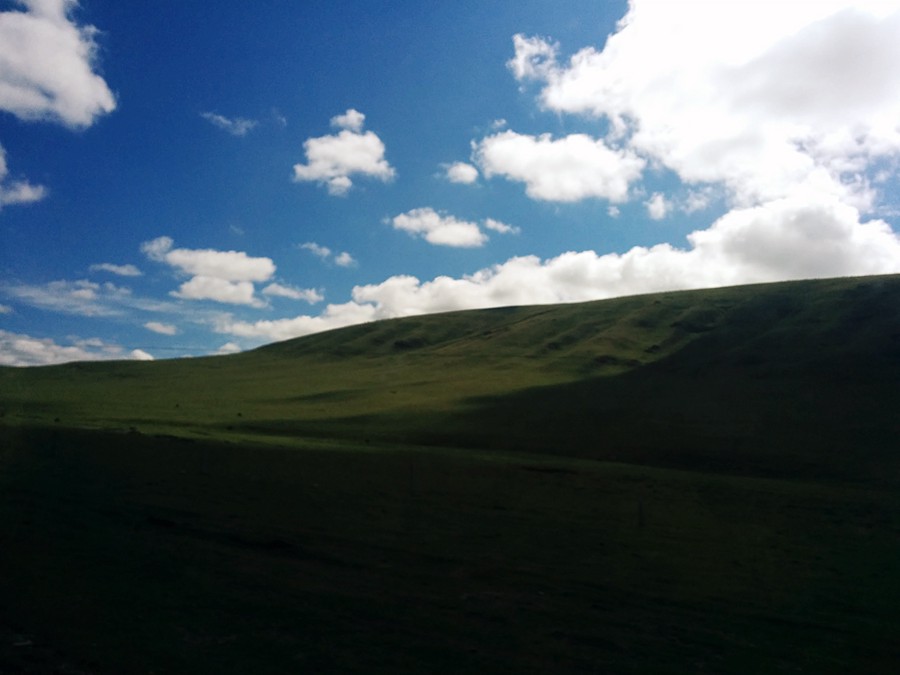
Random Microsoft Desktop Picture
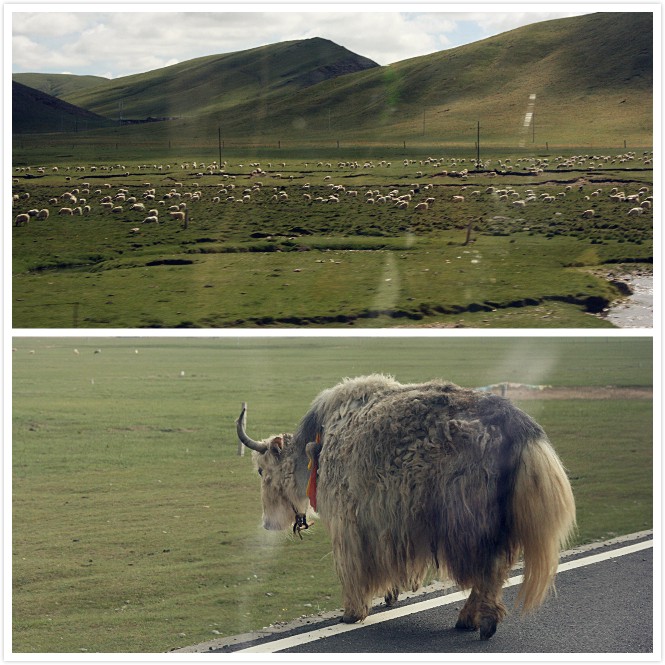
We saw herds after herds of yaks and Tibetan sheep. Sometimes the herds blocked the road and we could only move at a snail’s pace. Our driver told us never underestimate the value of these livestock, a yak can be sold at 10,000 RMB (1,600 USD) at the market and the sheep is worth over 3,000 or 4,000 RMB (500-620 USD) each. Each of the Tibetan families own around 80 yaks and 100 sheep….Every part of the yaks is treasure, the meat is edible, the blood and horns are ingredients for Chinese medicine, even their droppings are not wasted. Tibetan people make the wall of poops outside their home, dry them and burn them as fuels. At one place they would separate the poops of different animals from one another with the figure of that animal in front. Of course, the figures were made of poops as well.
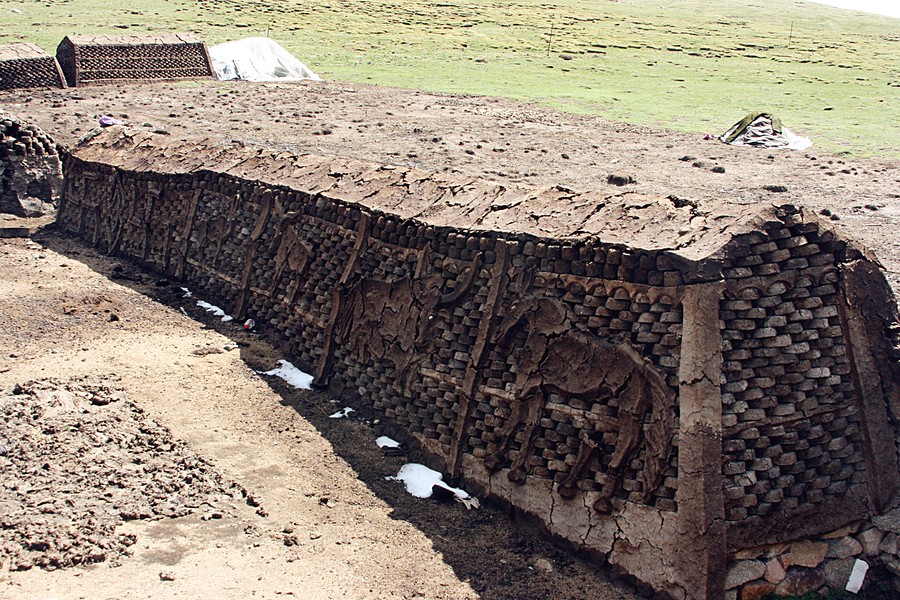
The Poop Wall
Besides yaks and sheep, there are other species living at this altitude. Plateau pikas are one of them. They were not afraid of humans, probably because they are truly the master of this land. They were super tiny and cute, looked exactly between a rat and a bunny.
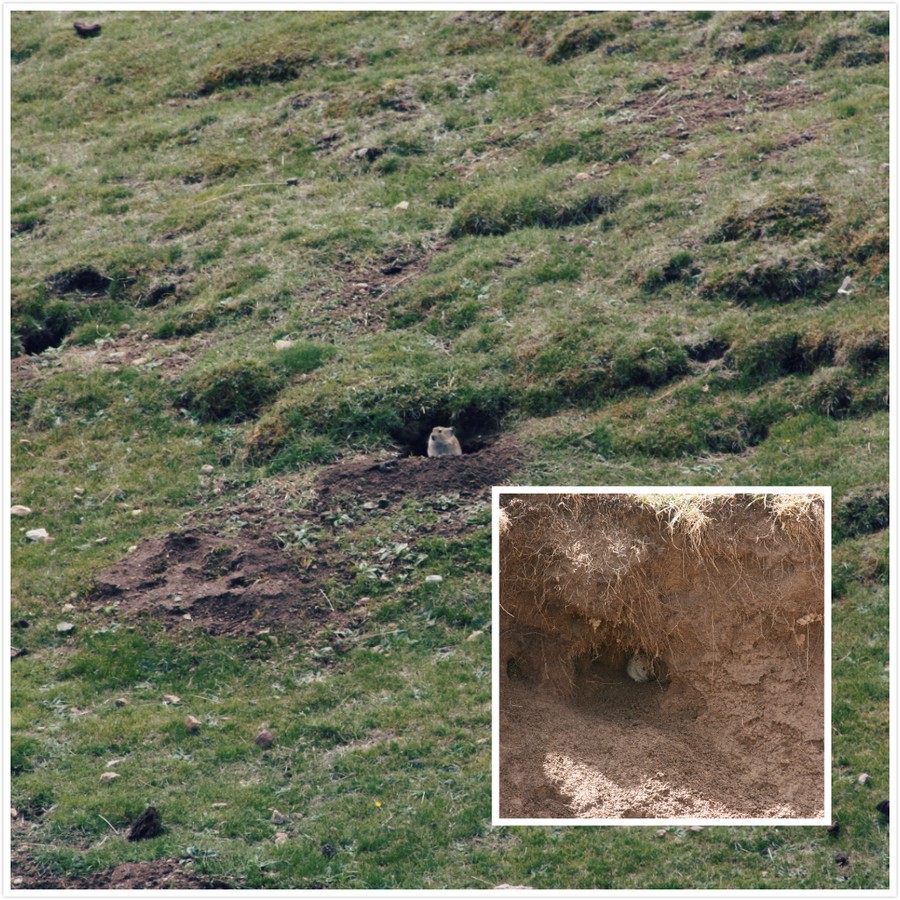
The Cute Little Creature of the Plateau
I wanted so much to feed one but Todd suggested not to. The other one is more exciting—the vultures. We saw one on the way, which was preying on the body of a dead yak. My husband and another girl went down the van to take some pictures of it.
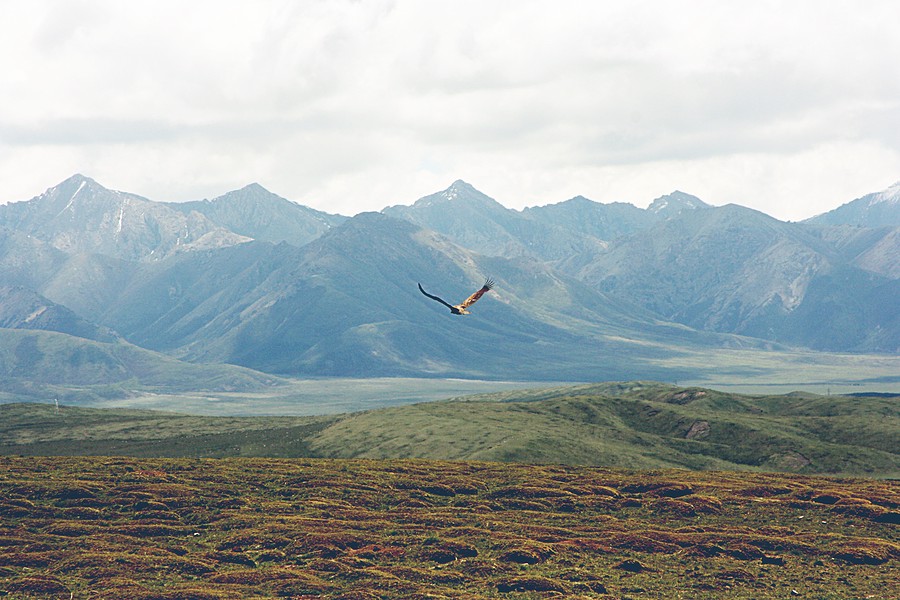
The Soaring Vulture
Of course the vulture would not be waiting for them to get close. After a few snaps, the girl asked the driver how to get closer to the vultures. Our driver, without thinking, said, “You can try laying down on the ground as a dead body.” It sounded funny but the celestial burial was actually a ceremony for the vultures to eat up the flesh and bones of the deceased. The ceremony is sacred to the people who practice it and is not open to the public for view. It is said that before the corpse of the dead becomes rigid, the monk chants mantra and burn incense. They bend the corpse of the dead into the fetal position, symbolizing the position of a newly-born baby, wrap it up, and carry it all the way to the altar on the mountain top. The process of disassembling the corpse is normally done by a monk, or by rogyapas meaning the “body breaker.” Soon after the process of disassembling is done, they will burn a special incense that will attract the vultures to come and prey on the corpse. The cleaner the vultures eat, the happier the family of the deceased are, for they believe this is a specific practice of incarnation. Though the burial is not open to the public, pictures can be found online. As we ascended to new altitude, I began to feel fatigue. I felt tired and slight chest ache, and most importantly I lost my always-good appetite. At the altitude of 4,100 meters, our driver pulled over at a vista for us to check out some Tibetan altar.
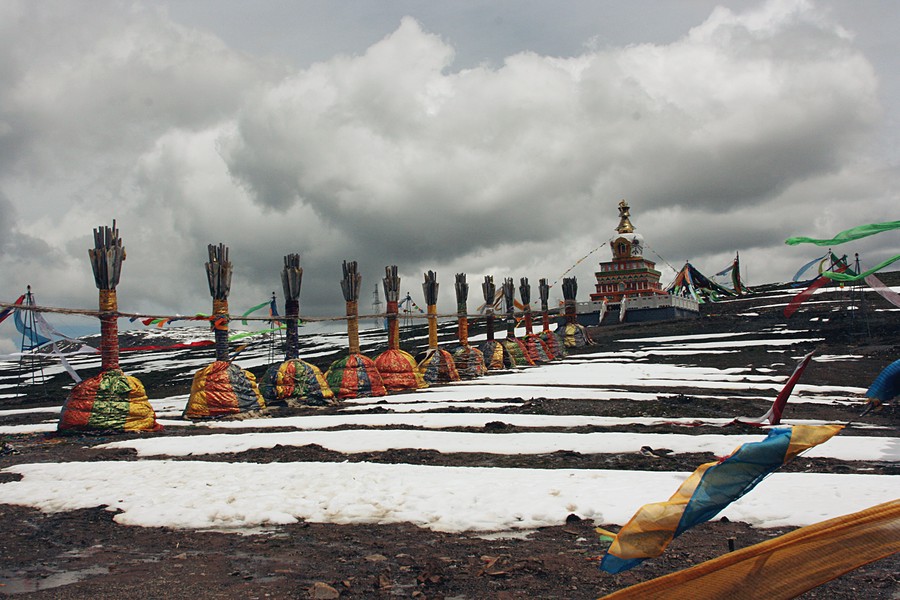
The Tibetan Altar on the Mountain Top
I found it really hard for me to walk fast and breathe. Before our trip, I looked up online on how to adjust to altitude sickness. Some suggested to take some medicine but I took the traditional way of drinking more hot brown sugar water, which actually helped. They said that when the construction workers undertook the construction of the railway to Tibet, they used brown sugar drinks as their remedy to fight against altitude sickness. So the moment I began to feel the altitude sickness was taking its toll on me, I sip some for the drinks. BUT, I managed to adjust at the altitude of 4,100 meters.
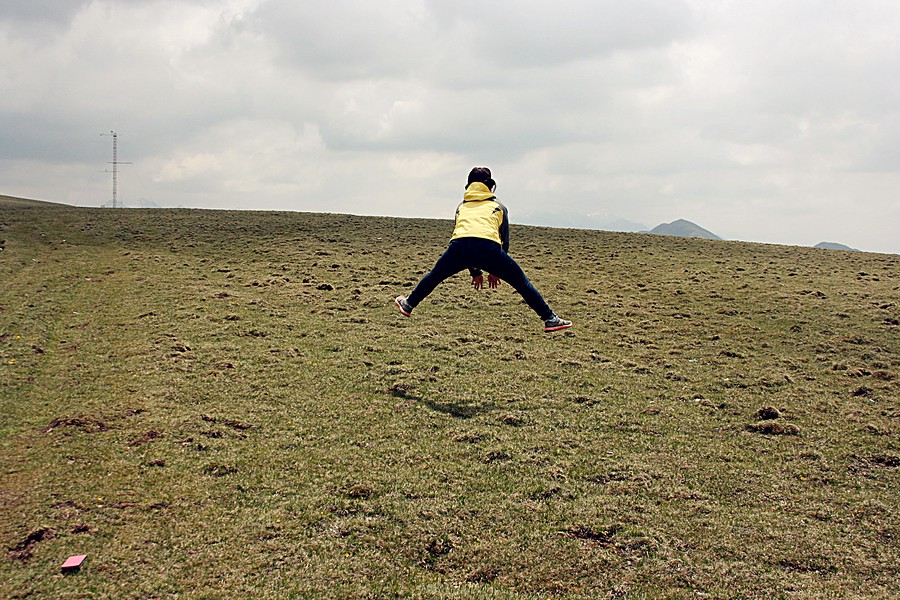
I Jumped!
Plus, I never forgot the freshly made yogurt mentioned by our driver. He said if we were lucky, we could find the yogurt made of yak milk which tasted different from the one in supermarkets. Good things come to those who wait and we finally found a small tent that sold the yak yogurt by the Tibetan herdsman. The Yak yogurt tasted thicker than the ones we normally buy from the supermarkets and it was super sour, you have to add a lot of sugar to eat with. After that vista we started to descend and my syndromes of sickness gradually disappeared. And we stopped at a certain place to see how the locals shear their sheep.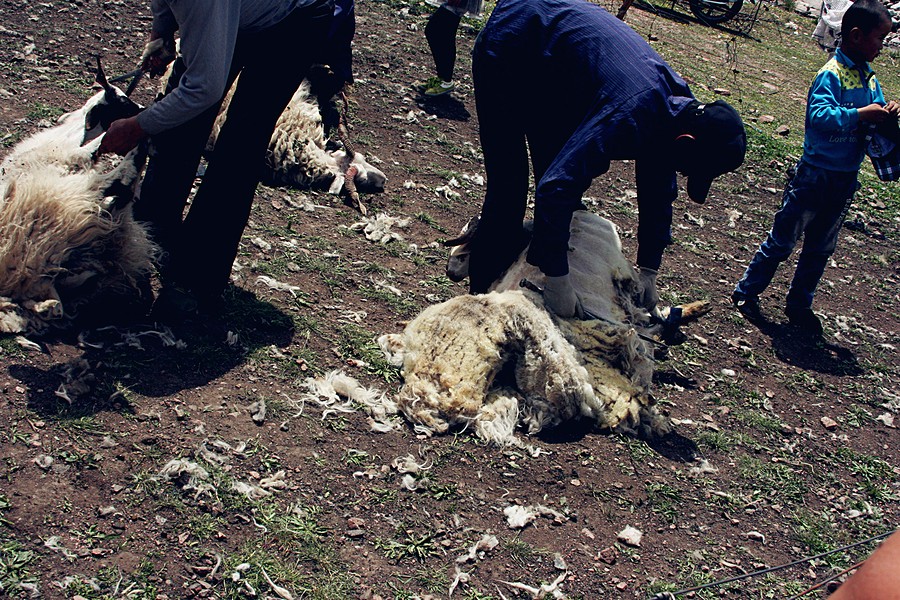
Zhuo’er Mountain was our second major stop of the day.
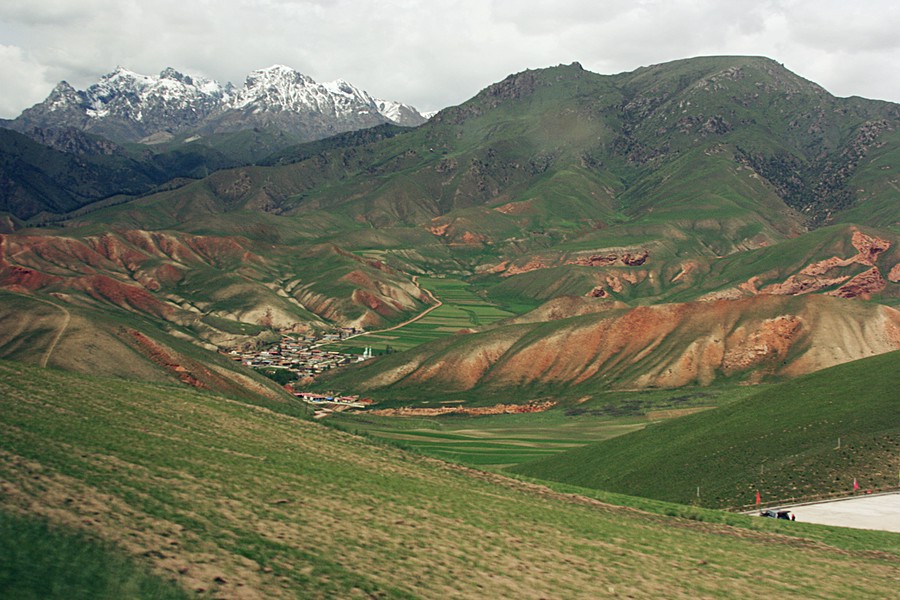
Zhuo’er Mountain
It is regarded the “little Switzerland” in China. The area open to the public is not big so it only took up less an hour to check it out. However, my altitude sickness came back and the path that took only 15 minutes for me to walk took me half an hour this time. I guess the reason was because I barely ate anything that day. One tip for you is that despite your lack of appetite, eat enough to support your daily activity. 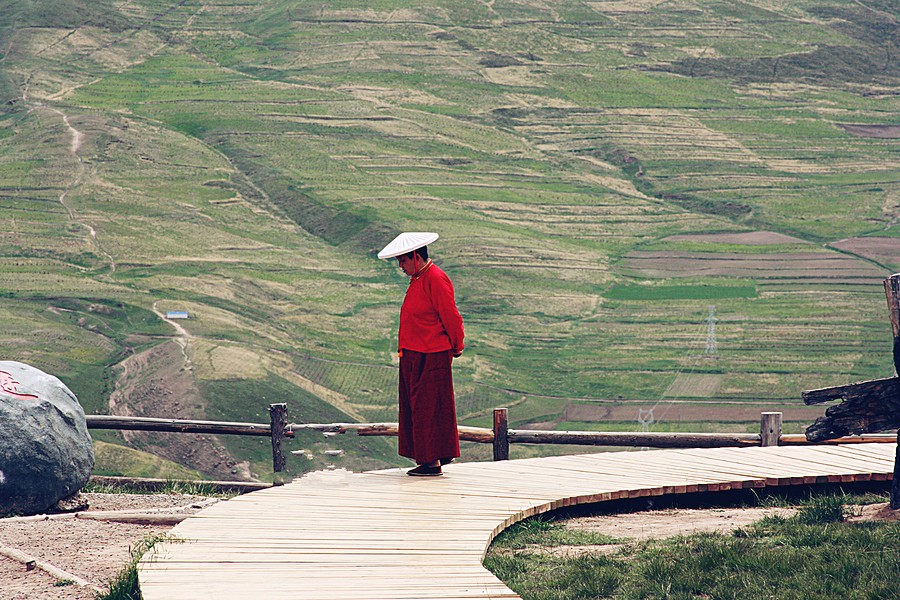
At Zhuo’er Mountain, I was attracted by a cluster of pretty little flowers in between the grassland. The beautiful flowers have a savage name “Wolf Poison Flowers,” which are poisonous at the stalk and root.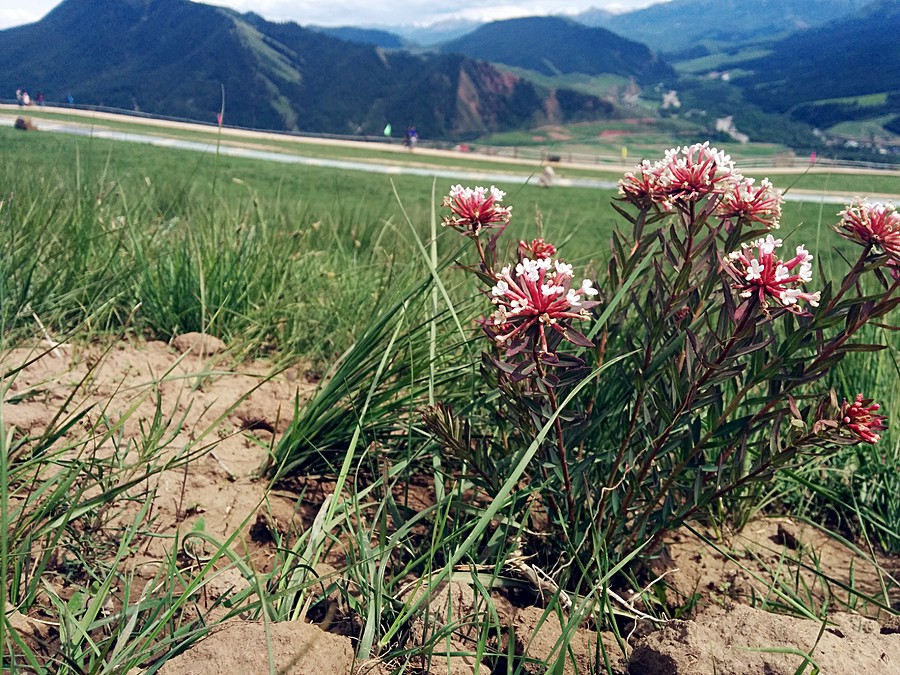
They are the barometer of the ecological equilibrium of the plateau. If there are too many of them, it means that the eco-system is deteriorating. However, sadly there were many of them on our way to Tibet and more down the road to Mt. Everest.
We went down into a town at the foot of the mountain to stay for the night. Todd and I walked into town to get some lamb skewers for dinner and then called it a night!