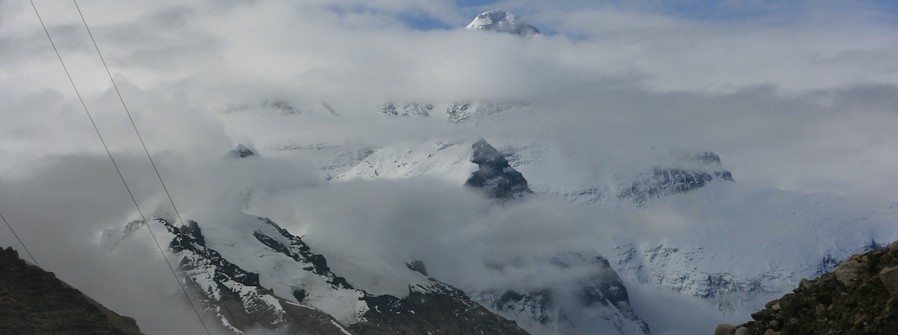
Well we made it to Mt. Everest (the Tibetan is Chomolangma so in English the Chinese use Mt. Chomolangma) and then back to Shigatse. I know this post is coming out of order, I haven’t posted anything else about our travels in Tibet yet, but we are back to somewhere with internet and I felt I had to share about Everest first. I will warn you ahead of time, this post is really quite long! I apologize for that, but it does cover two full days of our journey, and us crossing hundreds of miles and traversing rough terrain (in our old, green bus) to get there and back.
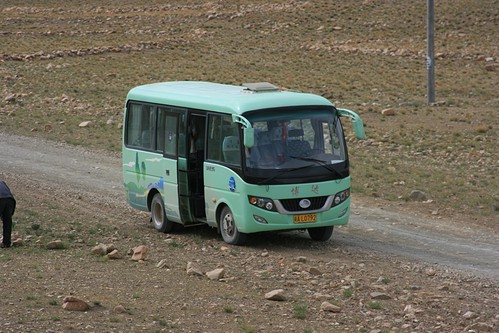 |
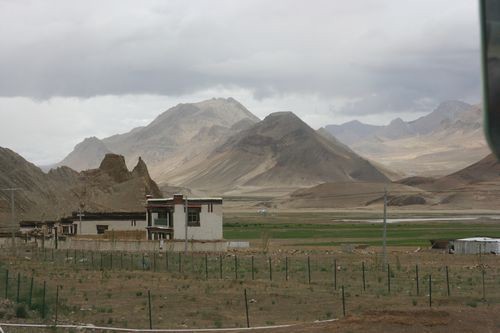
So yesterday (July 1, 2014) we departed from Shigatse at 7:30 am after eating breakfast in the hotel. The trip would take most of the day. We took our same bus that we have been traveling in this whole trip. This is especially impressive when you take into account the extreme conditions we drove through! I definitely have to give props to our driver, he handled everything with great skill.
Our only destination for the day was Mt. Everest itself, there were no other sites for us to stop by. Our only stops throughout the day were to use the bathroom (sometimes this was just the side of the road) and to eat lunch. Now if any of you are planning to visit Tibet I guess I should give you a heads up about the public bathrooms. Now like most of China, public restrooms are squat toilets (a whole in the floor, sometimes flush-able, sometimes not). In Tibet they usually charge one or two RMB ($0.16 – $0.32 USD) to use the bathroom, and they are some of the dirtiest bathrooms you will ever see.
I mean there is often literally crap on the floor, and definitely urine. A lot of these bathrooms are nothing more than a raised platform with a gap to urinate or crap through. This means there is usually a large pile of crap under the crack. As I said, apparently some people can’t aim because there is often crap on the floor of the bathroom itself from people who missed the gap (an impressive feat as the gap is usually a foot wide). Sometimes it is not a gap at all, but just a small whole (it is a little more understandable that some people miss these ones).
At Mt. Everest the bathroom consisted of finding somewhere to go to the bathroom behind the tent (no trees or large rocks, so no real privacy). These squat toilets are unavoidable unless you can hold off going to the bathroom for 20 hours at a time. That should be enough about the bathrooms.
Back to our trip to Mt. Everest. We crossed three passes through mountains to get there. Normally the last pass you go through gives you a view of the five tallest mountains in the world from one vantage point, unfortunately that pass is under construction this year so we didn’t get an opportunity to have that view.
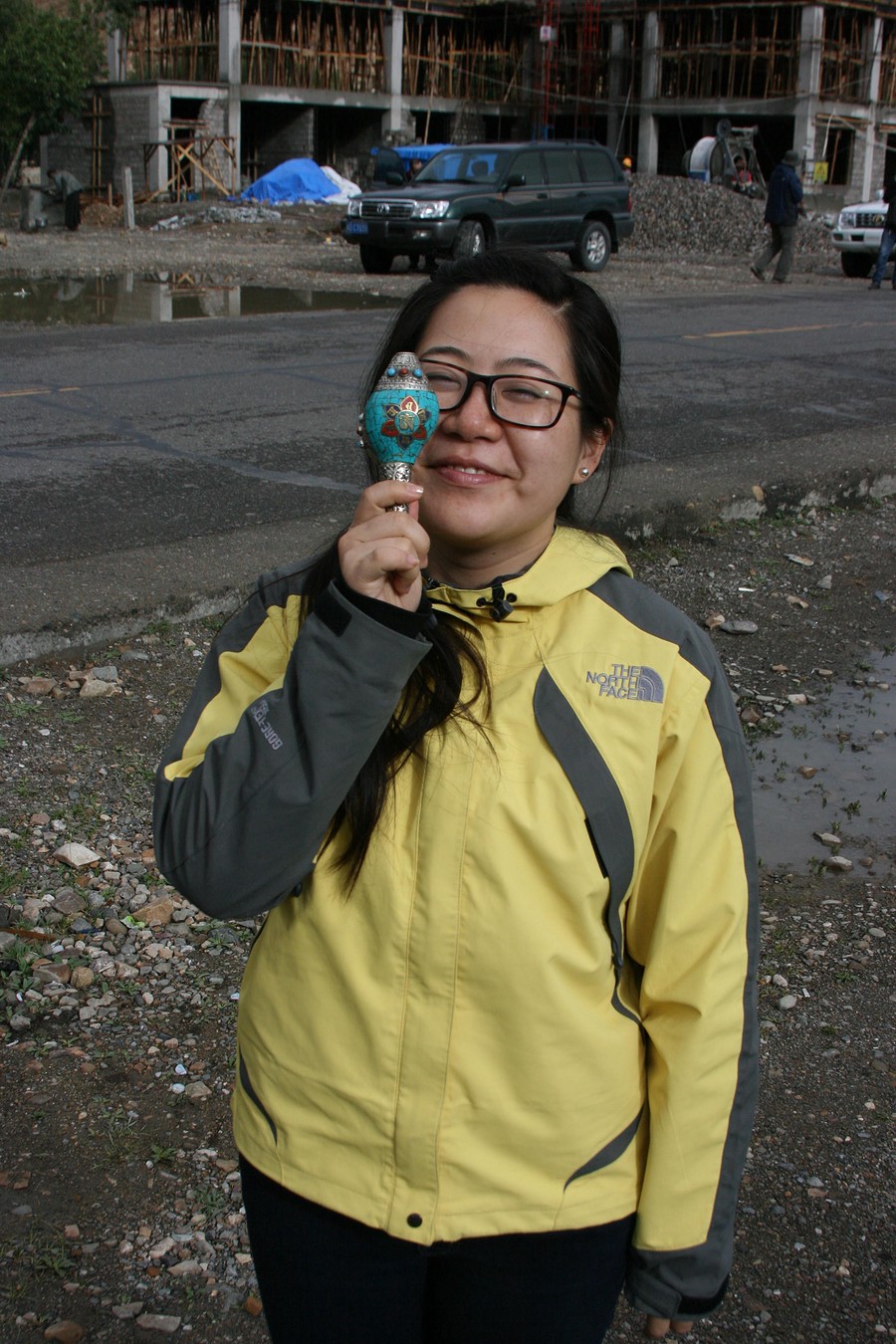
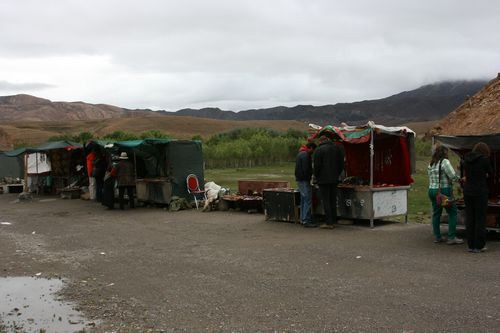
At many of our stops throughout the day there were local Tibetans peddling their wares. We finally made our first two souvenir purchases at one of these spots. One was a hermit crab shell (I’m guessing that’s what it was from) that was decorated with turquoise and tin (I think) giving it a unique decorative look. The other purchase was an old Chinese coin that is made of silver that I will make my wedding ring out of (for those of you who don’t know I made my wife’s wedding ring [technically engagement ring, but it looks more like a wedding band, and I got her a more traditional engagement ring later on] out of an old 1964 American quarter that was 90% silver, so I’ve been planning to make mine out of a Chinese coin but have yet to have the opportunity to do so).
 |
 |
 |
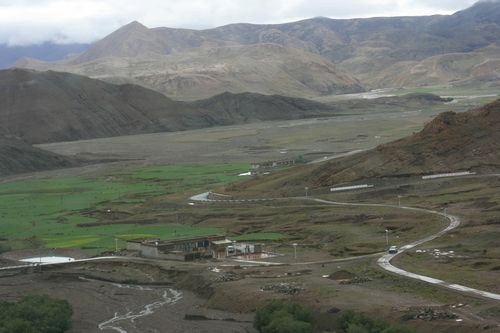
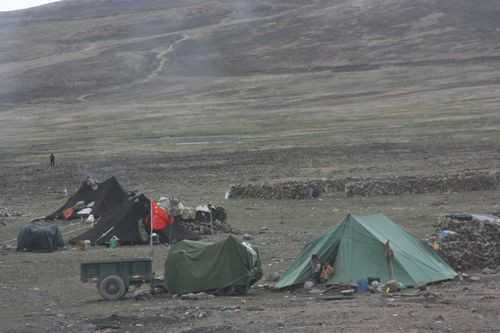
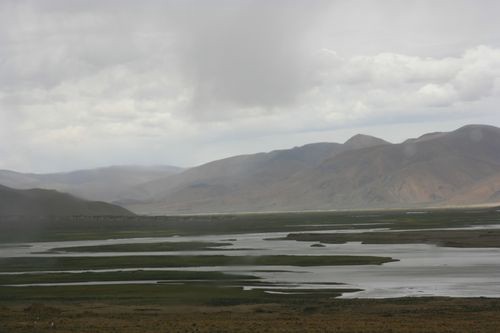
We were once again treated to sweeping vistas of plains dotted with yak, horses, sheep, goats, and tents of the herdsman who tend the herds. These vistas also provided us views of snow-capped mountains, villages, and rolling hills. Also, being at such a high elevation the clouds seemed very close to us, and in fact even some of the smaller hills reached up through the clouds so that we could not see their tops.
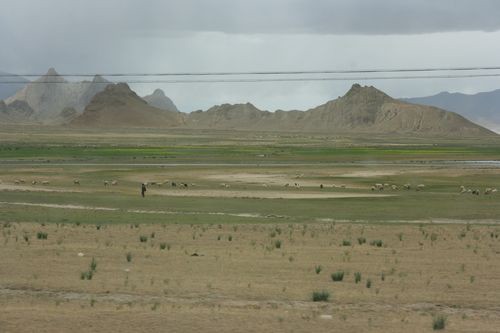
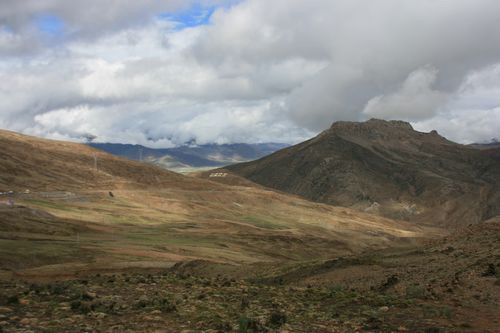
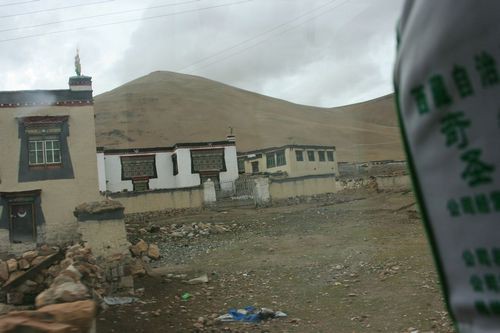
Over one of the passes we were at 5248 meters (16,793 feet) in elevation. I took the opportunity to hold my breath there, I made it 30 seconds before I decided it was unsafe to continue. At 30 seconds my lips were turning blue and the corners of my vision were blacking out. There was a lot of construction along the path as well. Right now the path is very hard to get through, having lots of dirt and gravel roads. The construction presumably will make the route easier, but for now it just makes the trip longer.
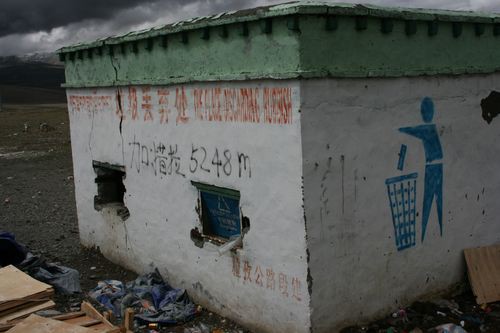
I’ve noticed that in China a higher percentage of the construction workers are female than I have seen in the States or other places I have traveled. I’m not sure what significance this has, but it is something I have noticed.
Also throughout this particular drive we had to stop at each new county to register (us foreigners traveling in Tibet are especially troublesome  ). At some of these we had to get out ourselves to have our passports inspected and checked against our actual appearance; at others our tour guide took our passports in to the police station for them to look at. At many of these stations they had fully armed soldiers standing at the ready with their AK-47s and other weapons.
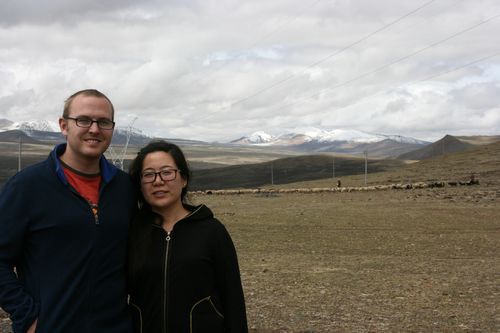
Many of us handled the high altitudes pretty well, but there was one guy from Chengdu who got fairly sick and required oxygen. Many of us did get slight headaches, but nothing to serious. My wife, Ziqin, did get somewhat sick during the trip, it is likely attributed to the altitude but she never used oxygen so it is hard to say. Hers was mostly a stomach ache, but also a pretty severe headache which was very likely the result of the high altitude. This is all the more likely since she felt fine as soon as we got back down to 13,000 feet the following day.
 |
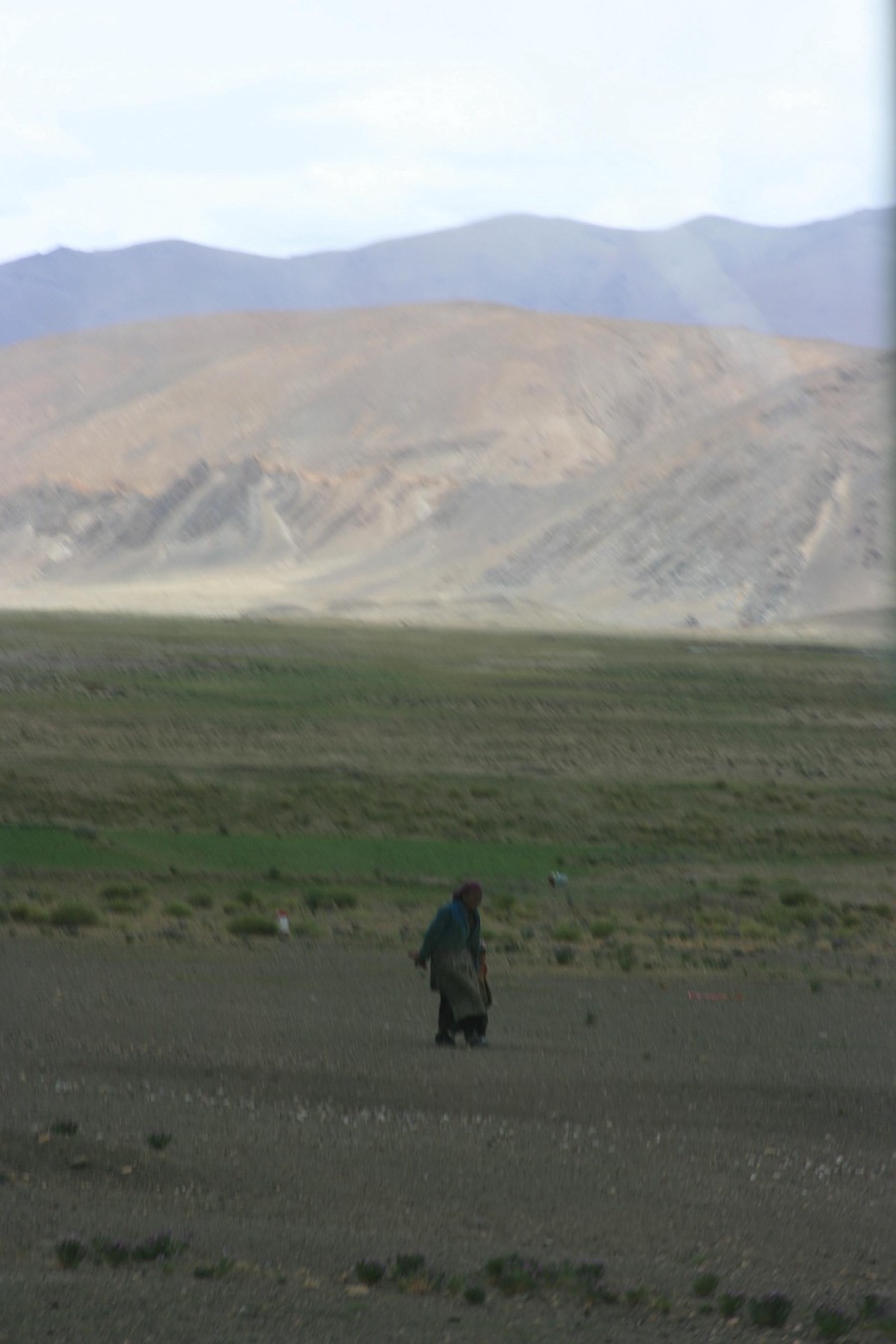
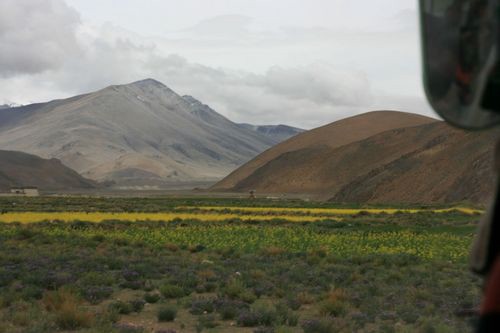
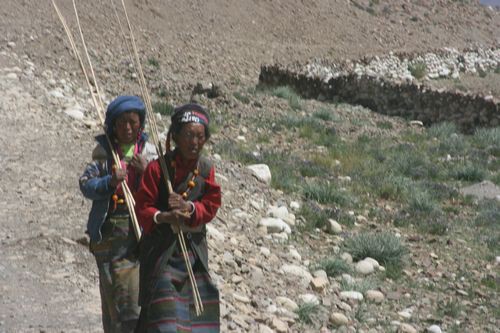
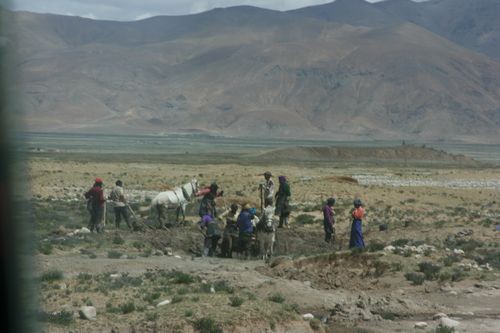
In some of the areas we crossed we saw locals using horses to pull their carts full of people and/or goods of different sorts. We also got the opportunity to see many Tibetans in traditional Tibetan clothing. We also passed farms where Chinese barley was planted and also rape flowers (from which Canola oil is derived) were rather ubiquitous.
 |
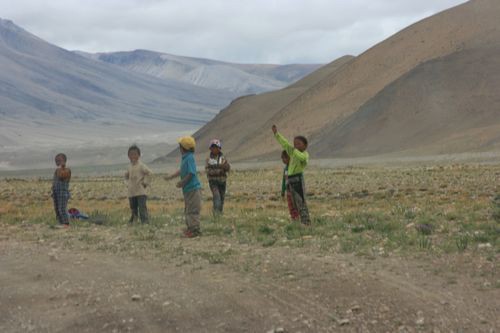
We saw children playing and then stop playing to wave at us as we drove by. The people up in these areas were all thin, dark from sun tans, and many of the older individuals looked rather weathered. As we got closer to Mt. Everest it began to look more barren and desert-like. Dirt bikes were very popular throughout the mountains as well, as were the tricycle machines we have seen in other parts of China, usually the type with the dumping function on the back to empty it like a dump truck.
 |
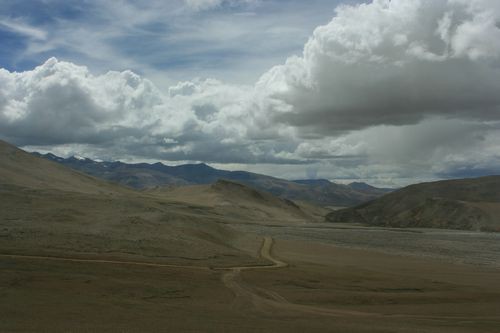
The sky out there was also very blue. Living in Beijing I often forget how blue the sky is supposed to be. In these mountains it appeared to be in its most-natural, bluest form with stunningly white clouds floating throughout it. The clouds persisted through much of the day making many of us worried that we would not have a clear view of Everest when we got there. Lucky for us the clouds had mostly moved away by the time we got to the “base camp” we would be sleeping at.
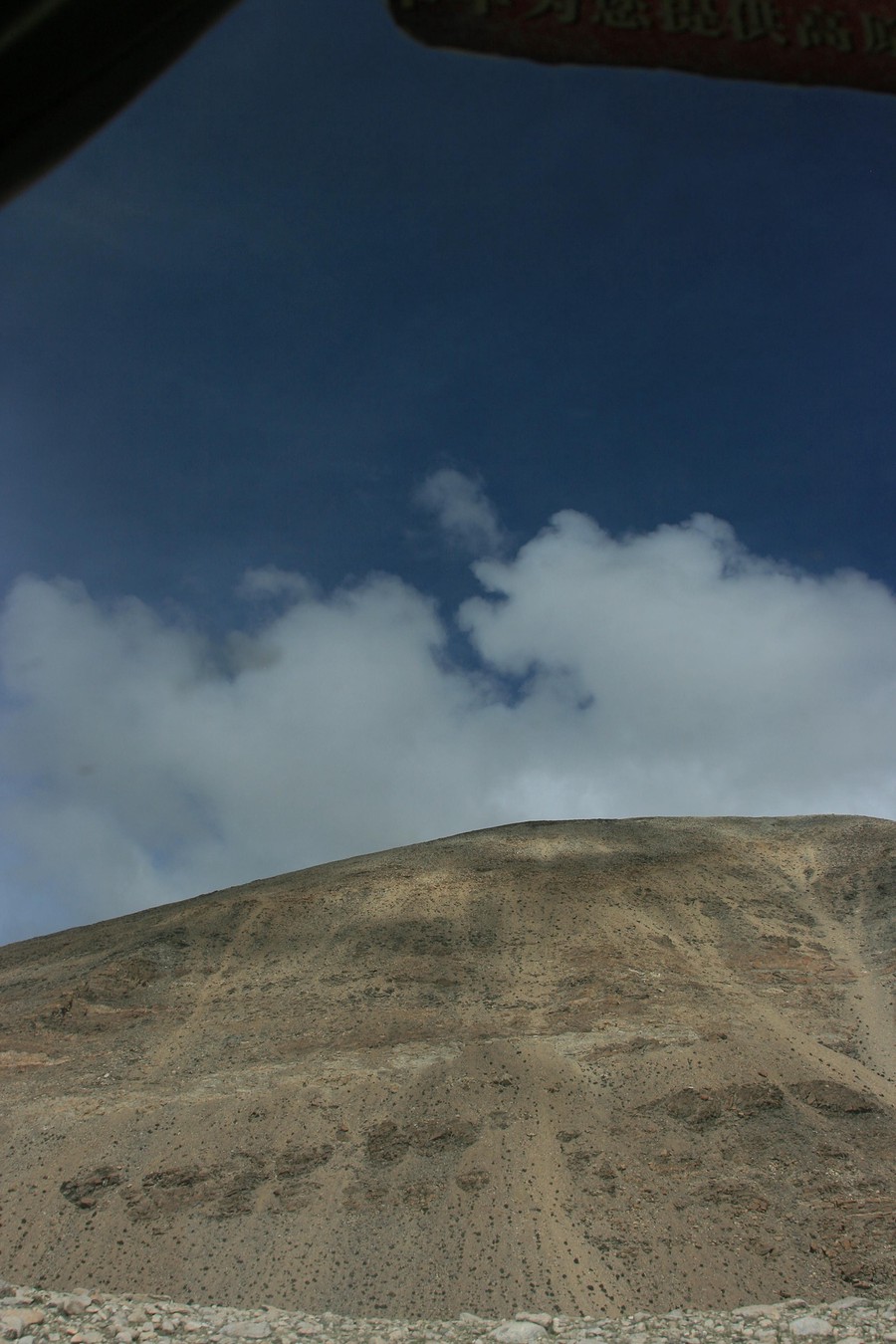
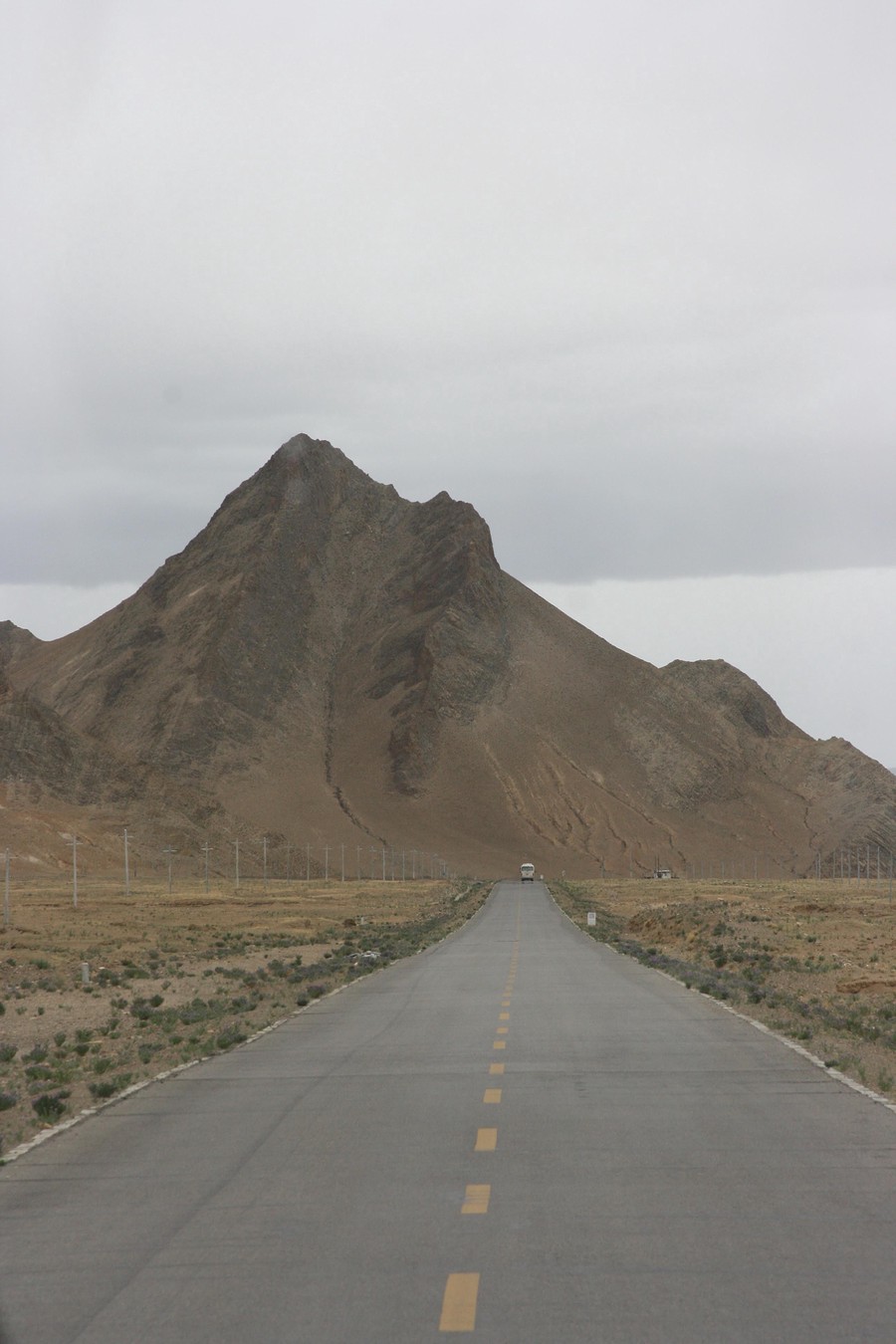
Before I jump to that part though I should share more about the roads we traveled over to get there. We had to cross many small streams and rough terrain in our tour bus. The last three our four hours of the journey were all on a very rough dirt and rock road. Driving on that road it felt like we were in an earthquake, the shaking of the vehicle was very intense! It made concentrating on anything nearly impossible. I recorded a short video of it on my cell phone, and it sounds like the microphone is not working, but that is just because the shaking was so intense that nothing could be heard! It was like this for three or four hours!
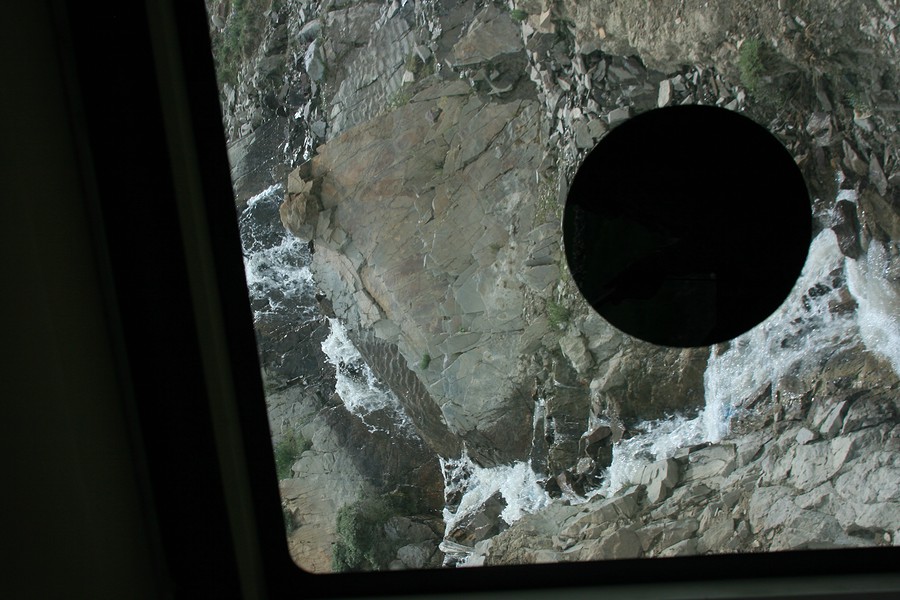
Stupid sticker on the window got in the way, but this was a tiny stream we crossed
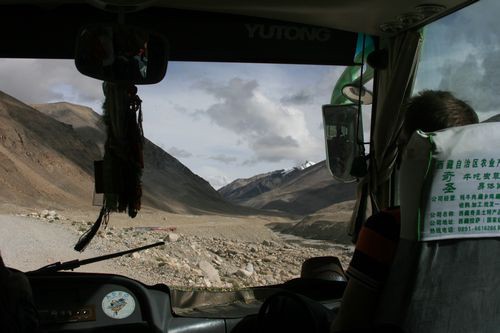
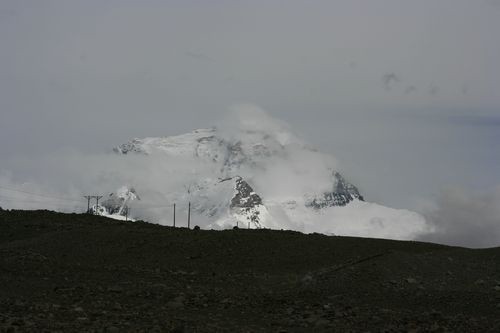
I was very excited to see Mt. Everest for the first time. We stopped on top of a hill a while before we got to the actual destination as it had a clear view. It was a breathtaking site, but not as breathtaking as what we’d see soon after when we actually did get to our destination. I remained torn between enjoying the view and being with my wife who was feeling very unwell. I took my first pictures of Everest and then quickly went back in the bus where she was.
 |
 |
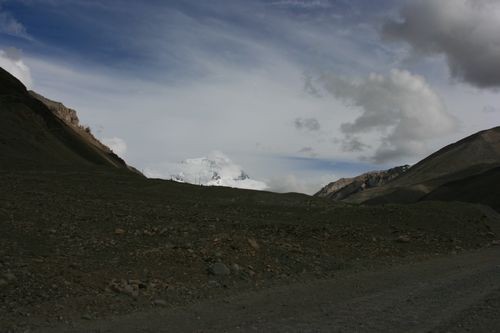
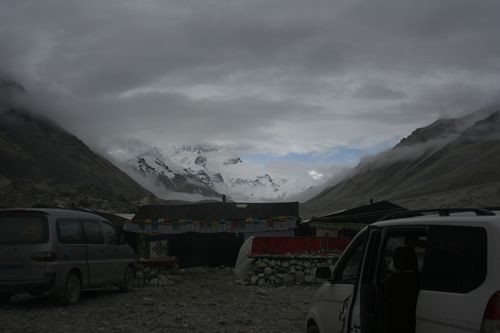
Following that first view we went through our final checkpoint where we all had to file into a tent to have our IDs checked by a Chinese People’s Liberation Army (PLA) soldier before we boarded the bus again and went on to the highest hotel in the world, the so-called base camp. It wasn’t really a base camp but was in fact just a hotel made up of tents for tourists like us. Our group was divided into two tents, Ziqin and I slept head to head on a long couch-like bed.
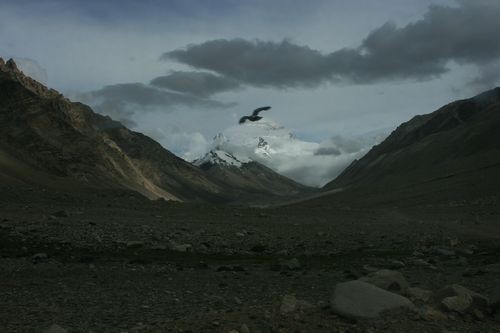
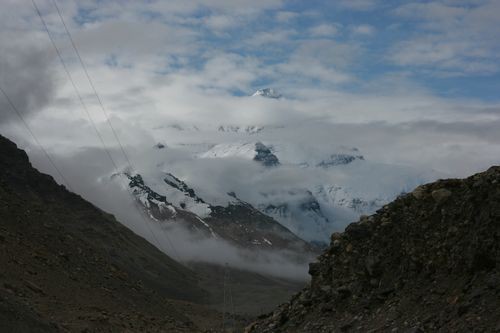
During daylight the tent was heated by a stove where one of the workers at this hotel burned dried yak poop. Originally we had planned on having the option to either take the bus from this hotel to the real base camp, or walking to it. We arrived a bit late though, it being 6:30 pm by the time we got there, and so we all had to take the bus.
We made it up to the base camp (currently no one was staying there) and got an even better view of Everest. Ziqin felt well enough to walk up to a sign which showed the elevation so I could take her picture (we were at 5200 meters [16,640 feet] here). She then rode the bus back down while I walked back down. This was my first hike in the Himalayas, and really it was just a two mile walk down hill, but hey I’m counting it!
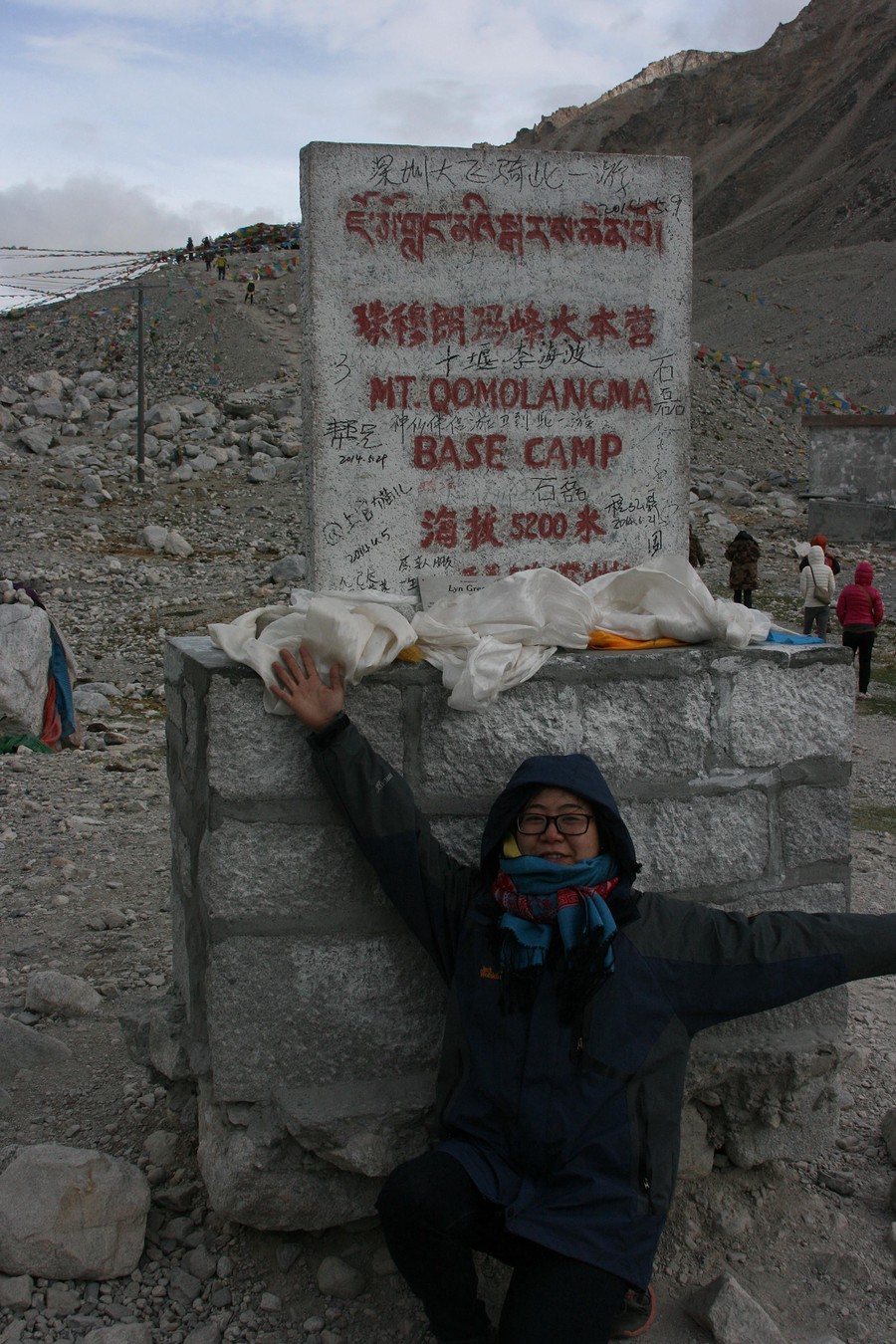
As I walked back down with a tourist from Germany the view kept getting better as the clouds moved, so I took several more pictures. Looking around I still couldn’t believe I was actually standing this close to Mt. Everest! I don’t think I had ever expected to be here. A year-and-a-half ago I had never been further from America than Mexico. Now I’ve been to Kosovo, Germany, Macedonia, Greece, Italy, Vatican City (hey it is a separate country ), and all over China.
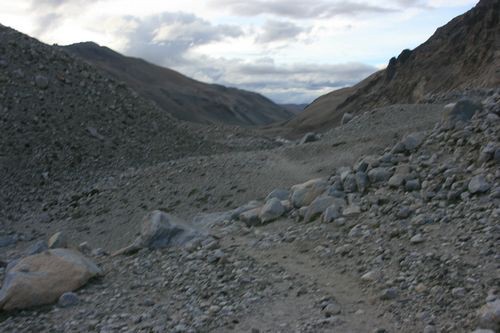
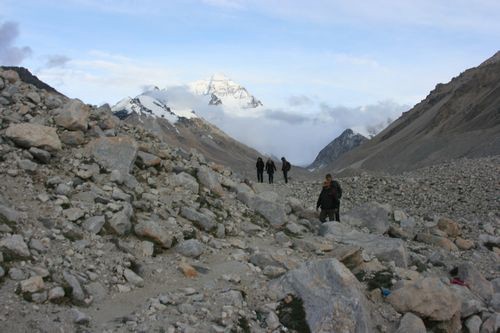
Aside us as we walked down was a river that flowed from Everest down into the Tibetan desert. Honestly the scenery around me was not what I had expected. Mt. Everest looked more or less how I expected, but I had not realized that the Tibetan side of the Himalayas was so barren! It is truly a desert! The mountains and hills are nearly lifeless and covered in gray dirt and rocks. It is not as popular to climb Everest from the Tibetan side as it is considerably harder. The tour guide for the other group traveling with us told us that only about 500 climbers attempt the ascent from the Tibetan side of Everest each year. He further said that of those 500 approximately 180 die.
The same guide also mentioned that the Tibetan side has less oxygen as there are less plants on this side. Apparently on the Nepal side it is much greener. I think I might just have to go there some day and do some backpacking (Ziqin has already decided I’ll have to find someone else to go with me for that trip) and see what it all looks like from that side.
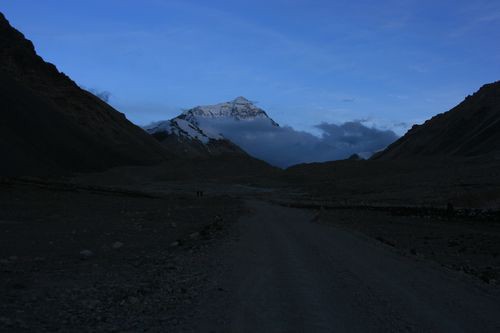
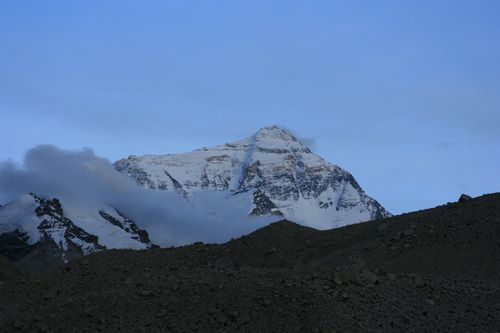
When there are less clouds the sunset reflects off of snow-capped Everest and turns the mountain yellow. Unfortunately that is not the view we got, but rather we just saw a darker colored Everest. It was still a pretty site and I took a couple pictures before I retired into the tent for the night.
For dinner Ziqin and I shared a pancake and some yak butter tea (which actually has no tea leaves and is really just butter and salt and some other stuff in water). Ziqin really wasn’t feeling well by this point and went to sleep early.
We slept decently under the piles of blankets provided us. The next morning I awoke before Ziqin but stayed in bed under the covers. The one member of our group from Chengdu who was suffering from altitude sickness continued to use oxygen intermittently. When Ziqin awoke she was happy to report that her stomachache was gone! She did however have a headache, most likely from the altitude. But we would be leaving soon enough.
 |
Our first stop after leaving Everest was the Rongbuk Monastery that was just a few miles away. The German fellow and I again walked the distance, it was between two and three miles and we covered that distance in a half hour. We jogged for a couple short stints, each time we stopped jogging because I was getting light-headed, a bit dizzy, and the vision at the corner of my eyes started blacking out ever so slightly, in any case I felt it best not to push my luck and so only jogged for those short stints.
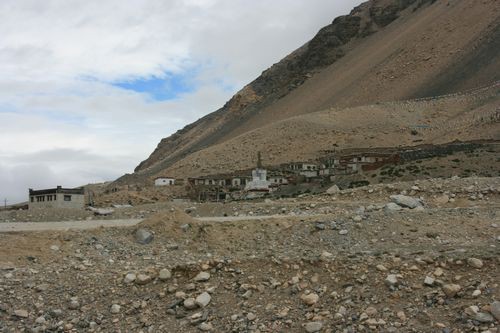
When we got to the monastery our other travel companions were all inside (except for Ziqin and a couple others who remained in the bus). I decided to take some pictures from the outside and not go inside either. At this point I was a bit burnt-out on Buddhist monasteries, from the outside they were unique, but inside they all looked much the same. Around 10:00 AM we departed the monastery and headed back to Shigatse, the second largest city in Tibet and the highest city in the world, and the same city we had departed from the previous day.
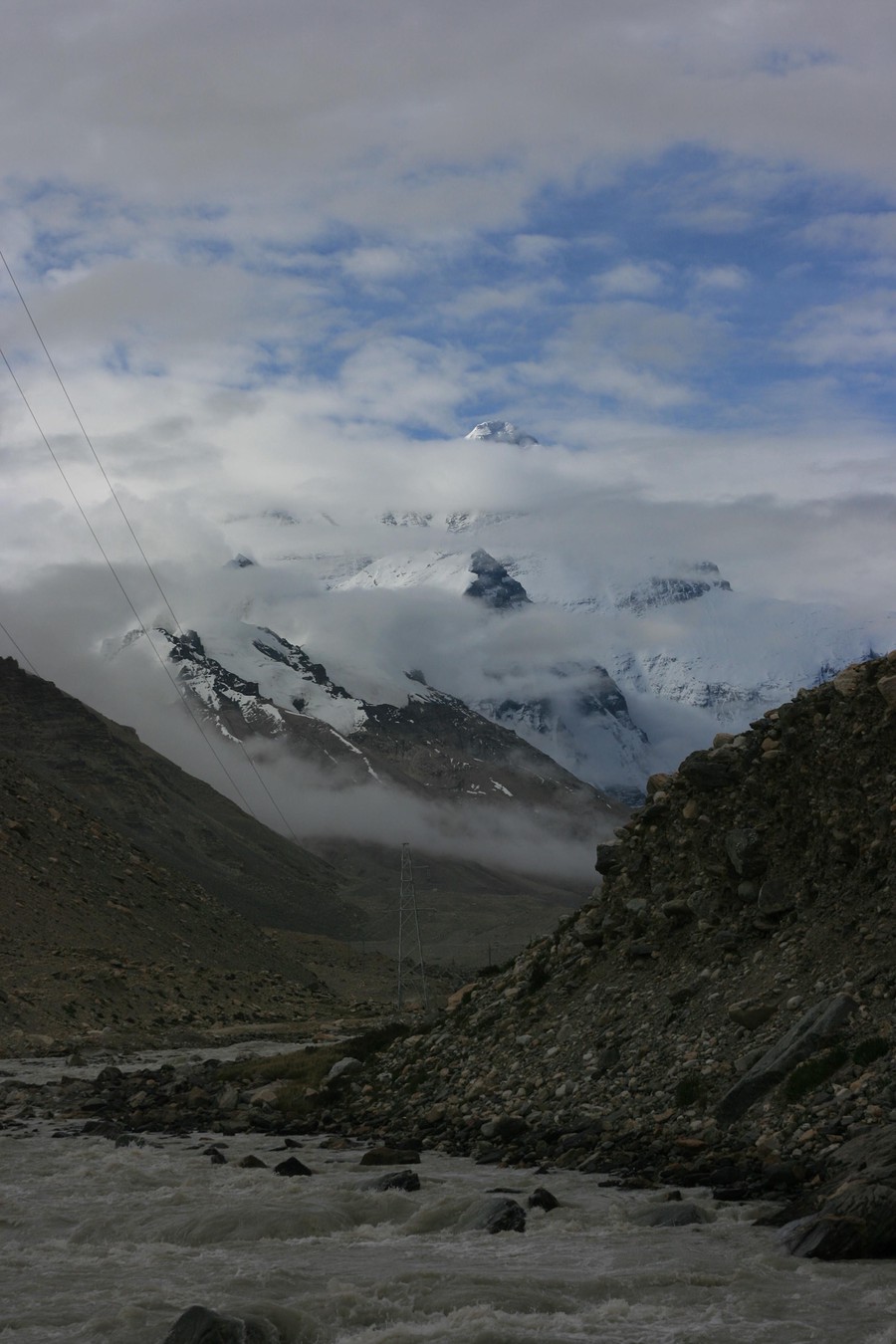
For the first few hours we repeated the bumpy road we had crossed on the way in. We stopped once to use the bathroom on the side of a river. After the three or four hours it took to get off of the incredibly bumpy road we were all very happy to be back on a real road! We stopped at the small town that was right at the intersection of our bumpy road and the real paved road. The town was named Lao Dingri, we ate lunch here. We ate Sichuan food for lunch, we have eaten Sichuan food for most of our meals actually.
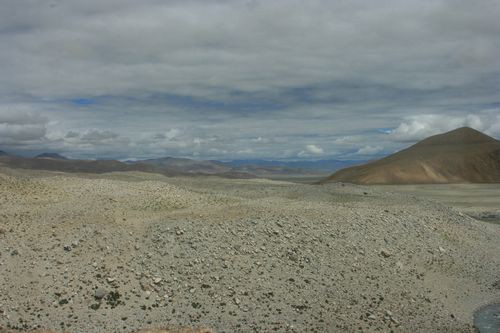
Sichuan is not far from Tibet and many of the citizens moved to Tibet for better money-making opportunities (this is according to a cab driver we talked to who had moved here from Henan province). This has resulted in many, many, MANY Sichuan restaurants throughout all the areas we have been to in Tibet. We have also had some Tibetan food, but for the most mart Tibetan food is somewhat plain and lacks flavor. The one main twist to the Sichuan food though is that in Tibet all the beef is from yak, so it gives it a slightly different flavor, but still very good.
After lunch we had to wait around in town for a couple hours. One of the members of our travel group was supposed to be going to the Nepalese border to cross over into Nepal. The guide was supposed to meet her in this town to pick her up. Unfortunately her travel agency was very disorganized and so the guide wouldn’t be there for a couple hours. She didn’t want to wait by herself (understandable since foreigners are not supposed to be alone in Tibet) so we all waited with her.
Her guide did eventually show up, and oddly he came in and ordered lunch and didn’t actually acknowledge the girl he was supposed to pick up until our guide told her that was her new guide. Anyhow, after that we got back on our bus and proceeded back towards Shigatse. We had to cross back over a couple passes, so members of our travel group had headaches off and on (myself included) as we went up over 5,000 meters (16,000 feet) and back down to 4062 meters (13,000 feet) a few times.
Our trip back was also plagued with bad weather. There was very intense rain and lightning. There was also more construction than there had been on the way in and this made it so we had to stop a few times. One time we got stopped in really deep mud. Some of you may know that stopping in mud can be very bad, it is much harder to get going again once you stop, and we were in a bus! This wasn’t just mud either, it was deep mud with crazy bumps and turns, but our driver handled it well.
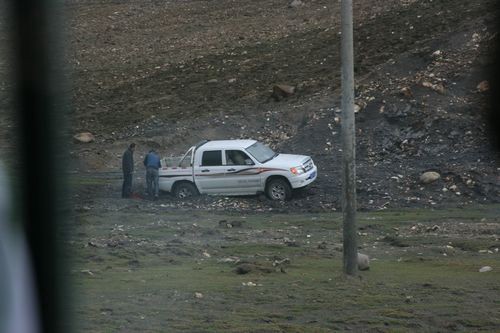
We came very close to getting stuck once, the bus slowed to nearly a stop, but the driver down-shifted (yes, our bus was manual) and kept the gas up and we slowly pushed through and then got to a spot with a little more traction! Once we made it through that spurt of mud all the passengers in the bus started clapping, we were quite relieved we would not be stuck in the middle of nowhere in Tibet while the bus got dragged out! Oh, a side note, there was a pickup truck that got stuck off the side of the road that we saw the passengers trying to dig out.
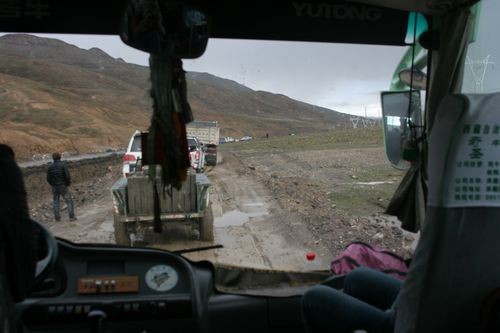
This isn’t even close to being the worst mud we went through, but I didn’t get any good pictures of the worst part…
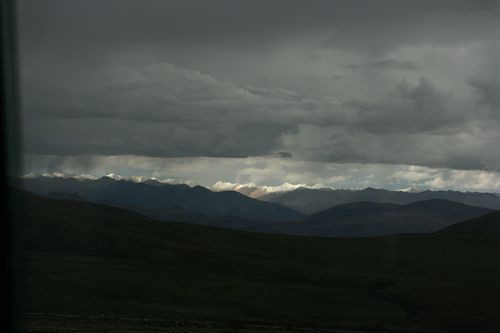
Well we continued our journey back to Shigatse, passing cars, other buses, the occasional horse-pulled cart, and many tractors pulling trailers full of various goods. As day turned to night the rain came and went and then came again. We drove by a river, and at one point the rain had been so intense that the road was flooded over. It wasn’t really deep, but it was about six inches of water probably, and it was a fairly swift current.
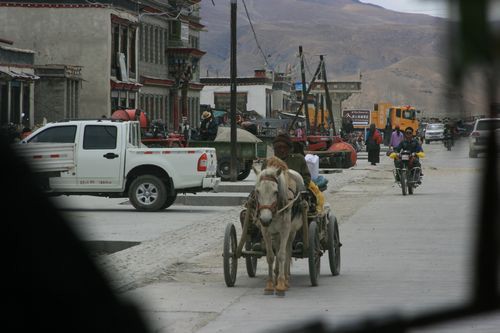
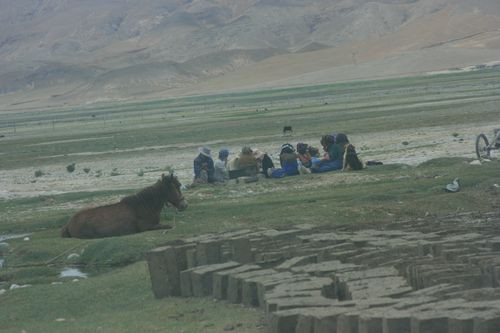
Our driver had to pump the gas a bit to maintain traction through this, I also saw him having to jerk the wheel against the current to keep us on the road. Throughout the mud I had seen him have to do this as well, we had slid our way through many areas of mud, but none as bad as the spot where we were nearly stuck. Once again both our driver and bus impressed us all and we made it through to drier ground.
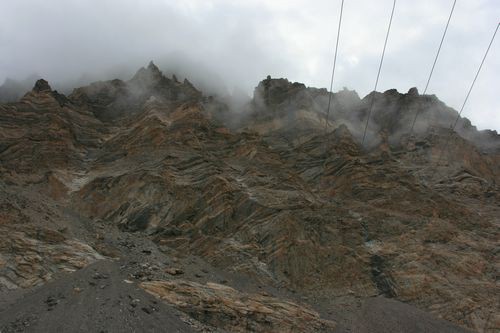
We made it into Shigatse around 11:30 PM and we all immediately went to our hotel rooms and went to bed! The next morning we would be going to one final monastery and then returning to Lhasa. Well that was the highlight of the trip for me, seeing Mt. Everest! I hope to backpack in the Himalayas someday in the future, and maybe even see Everest again!