I call this the Xining tour because that is where it started. We traveled to places outside Xining though. We even left the Qinghai province and traveled up to Gansu province close to the border of Inner Mongolia. We are now back in Xining at a hotel with internet so I figured I’d combine the last few days of that tour into one post.
Oh, first I have been true to my promise and have added pictures to the previous few blog posts:
First step on the way to Mt. Everest
Day one in Xining, not much to share
Day one of Exploring the Qinghai-Tibetan Plateau
We drove up over 13,000 feet elevation as we traveled through the mountains to get to Gansu. At 13,000 feet I struggled to hold my breath for 45 seconds! I’m interested to see how long I can hold my breath at Everest Base Camp which will be at 17,000 feet. Maybe 15 to 30 seconds? It won’t be long, that’s for sure!
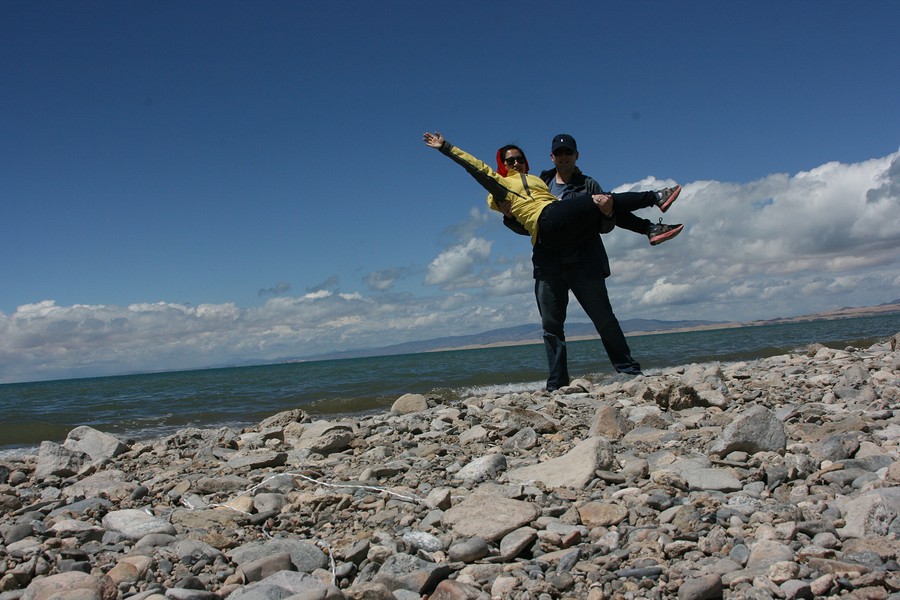
So the second day of our tour started with us waking up in out tent and then walking out to watch the sun rise over Qinghai Lake, though there were clouds on the horizon so we couldn’t see much of the sun.
After that we got ready to go and headed out to see some more scenery. That’s when we drove up to the highest point we went to during our trip, about 4,100 to 4,200 meters (13,451 to 13,779 feet). We had a very nice view from there, and there was still quite a bit of snow on the ground.
Throughout the rest of that day we saw lots of herds of different types of sheep, yak, cows, even some horses. We also saw small encampments dotting the green grasslands, as well as villages and towns throughout. Oh, and we stopped at a place that had sculptures made from yak feces! And sculptures made from the feces of other animals as well…(the dung is used as fuel for fires in addition as decorative artwork  )
)
Here are the pictures of the herds and scenery:
I personally found some of the modes of transportation quite interesting…tractors converted into a type of vehicle they use to get around town like this one:
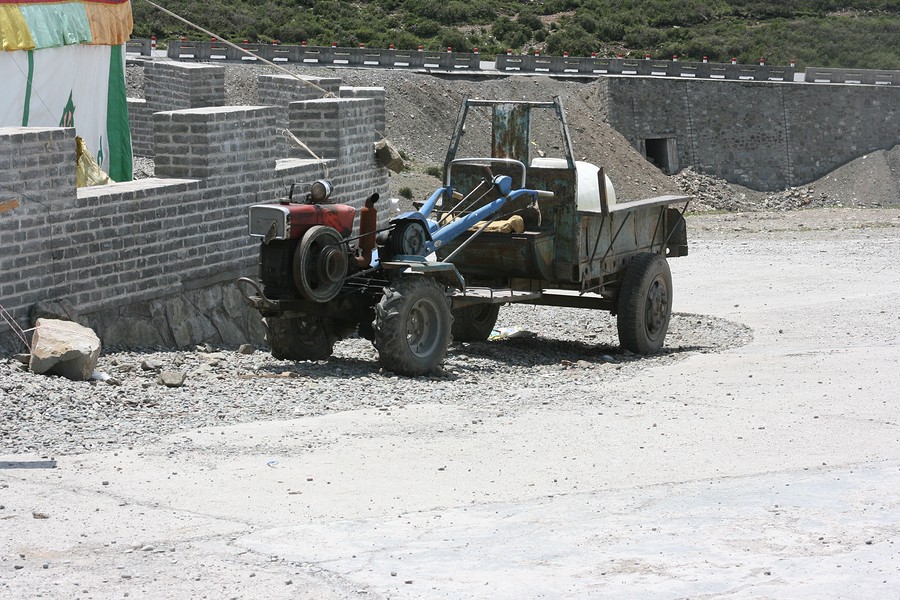
this was once a tractor, but is now used as a main means of transportation
There were also motorcycles, dirt bikes, scooters, and these tricycle things (the tricycle things and scooters are common in Beijing as well). Stuff that in the US we normally carry in pickup trucks is carried on scooters and these other smaller three-wheeled vehicles here:
Oh, and of course I almost forgot, this little three-wheeled car was rather ubiquitous in Qinghai as well:
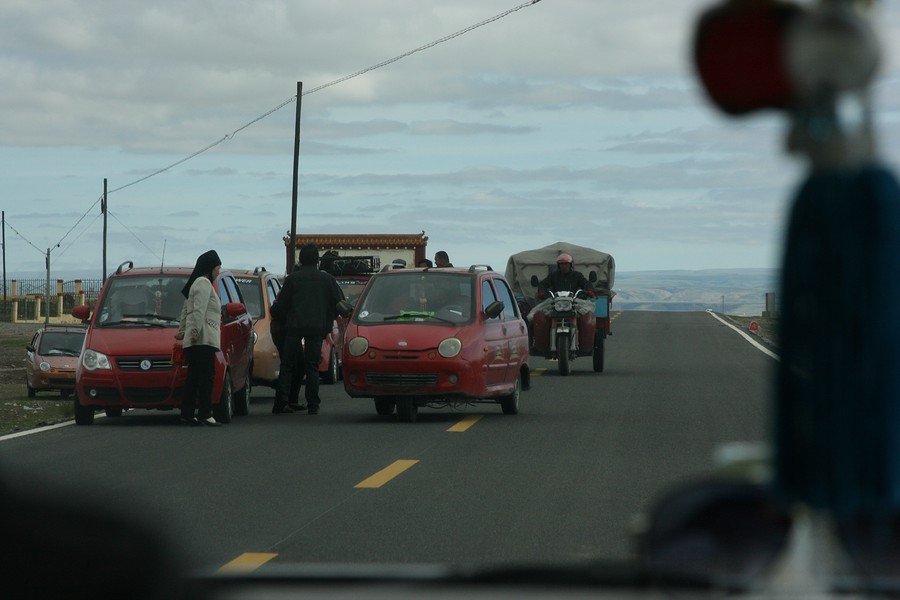
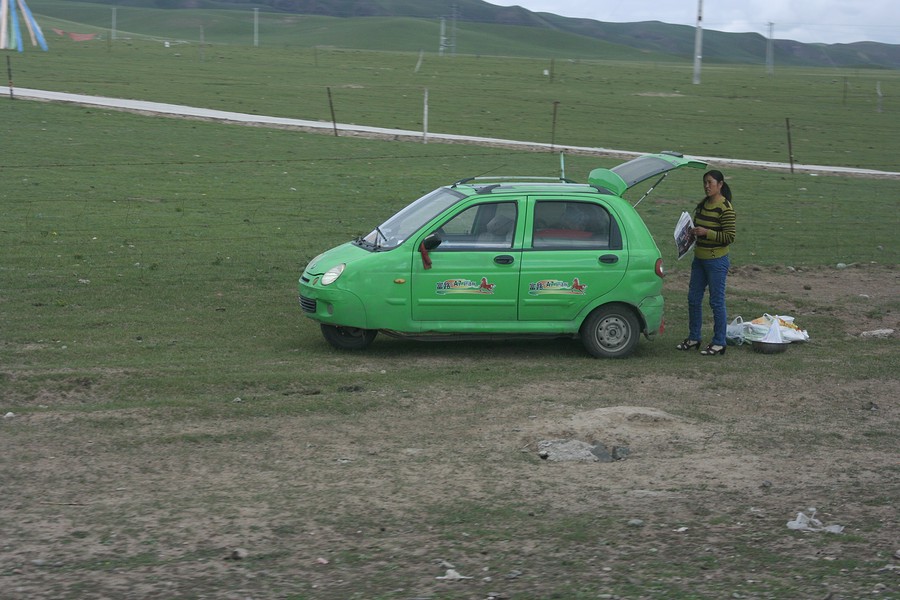
Mostly we just explored the plateau seeing all the beautiful scenery, these pictures can show it to you far better than I can explain it:
Oh and we also stopped and watched as one group of sheep herders (or shepherds if you prefer ) sheered their sheep using these giant scissors (no electric tools used). They would first walk into the herd and grab a sheep by it’s hind leg, then drag it over to where they were sheering them and tie its legs together, then they would sheer it. There were different people doing each portion of this. There were two young guys that would grab the sheep and tie them, then there were about four men and women who were doing the sheering, and then kids around that would help keep the sheep in the pen in case they tried to get out. There was also an old guy who just kind of watched what they were doing.
Along our route we also saw some vultures so we stopped to take pictures:
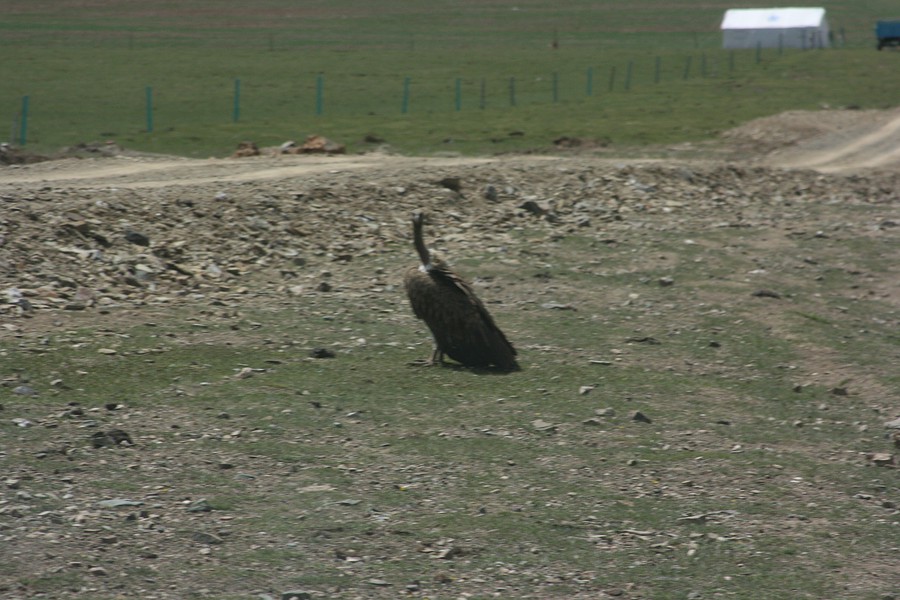

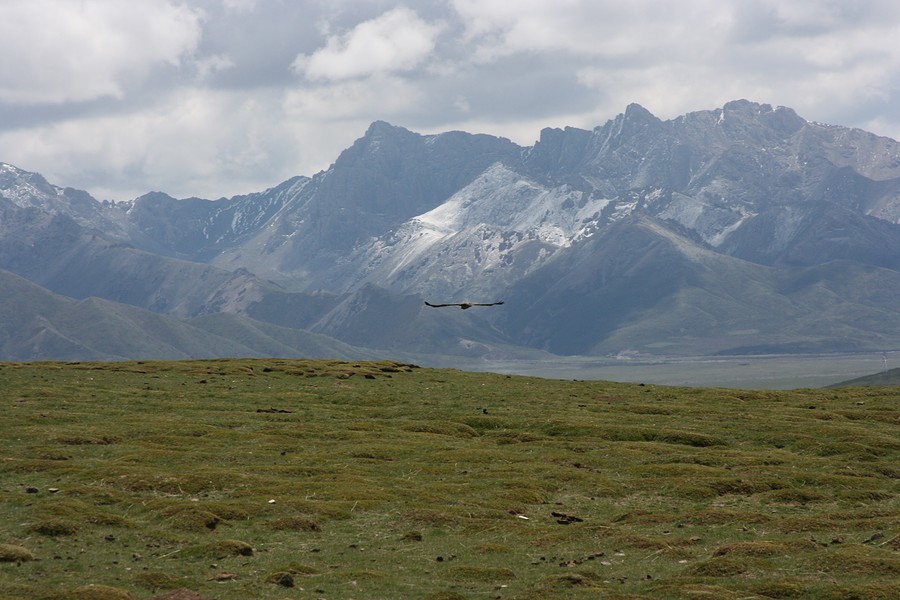
We later went to Zhuo’er Mountain. Which was another mountain with quite beautiful scenery. After the mountain we went and stayed in a hotel that was nearby. Ziqin and I went out for some grilled chicken and lamb kebabs for dinner. We also tried the local yak milk yogurt, which wasn’t too bad.
Oh, I feel like I should mention the hotel prices. So in China hotels are a lot cheaper than in the states. Even nice ones. My wife feels like we are staying in a very expensive hotel if we are paying 300 RMB a night for it (that is less than $50 USD). Of course I feel like anything that is 300 RMB or cheaper a night is nice and cheap. When we stayed in the hostel on that first night we payed 50 RMB (about $8 USD) per person. That’s the same price we payed for staying in the tent that second night.
Of course those were non-traditional hotels. The third night we stayed in a normal hotel and it cost about 150 RMB total for the two of us (less than $25 USD), and we payed about that amount for hotels during the rest of the tour. We upgraded a bit now so we can stay downtown in a nicer chain hotel, so now we are paying 207 RMB a night (less than $35 USD) for this hotel.
I think I’ve mentioned transportation costs before also, we normally take the bus, which in Beijing costs us about 0.40 RMB a ride (around $0.07 USD) since we have transportation cards; here we don’t have the transportation cards so we have to pay 1 RMB per ride (only about $0.16 USD). If we happen to take a taxi the cost starts at 6 RMB (less than $1 USD) and normally stays under 30 RMB (less than $5 USD), often under 20 RMB (less than $3.50 USD). So transportation is both more convenient and cheaper here in China than anywhere else I’ve been (it was convenient in many places I went in Europe, but not as cheap, though cabs in Athens were only a little more expensive than here).
So the third day of the tour we drove up to Gansu province to see the Zhangye Danxia landforms (colorful sandstone formations). These were quite an amazing site. We also climbed to the top of a hill in this area that required us to climb 622 stairs. Again, these pictures will describe it better than I can, so here you go:
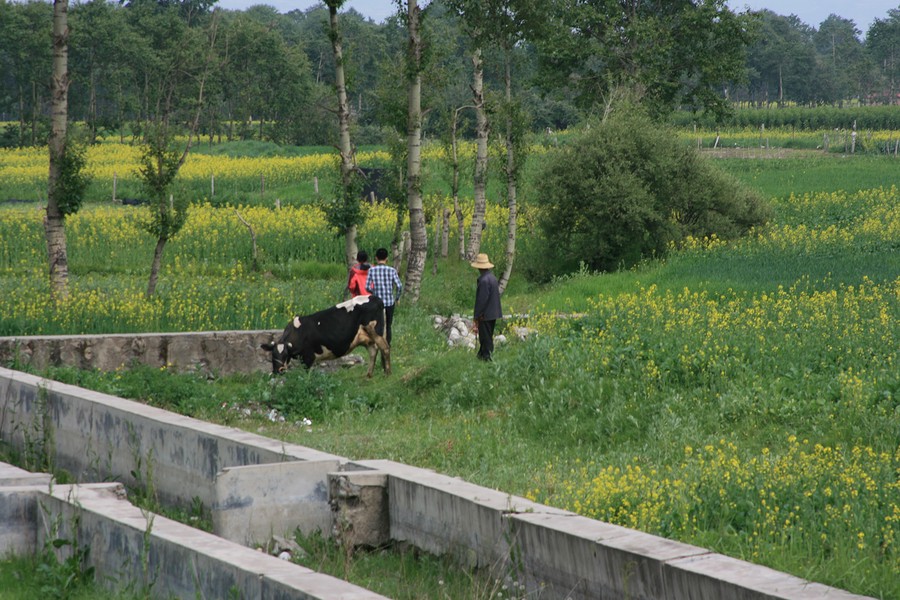
We stayed the night in Gansu province and the next day we drove back to Xining city, which is where we are now. On the way back we stopped at many sites to check out the scenery. We also stopped at a field of rape flowers (from which rapeseed oil is made). During the right time these flowers are all in bloom and from the right vantage point you can see seas of yellow flowers.
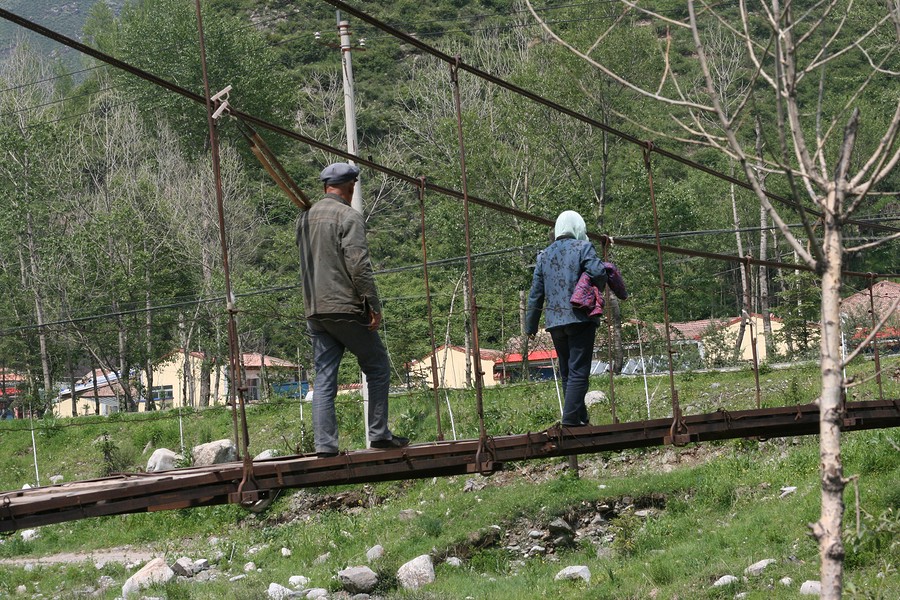
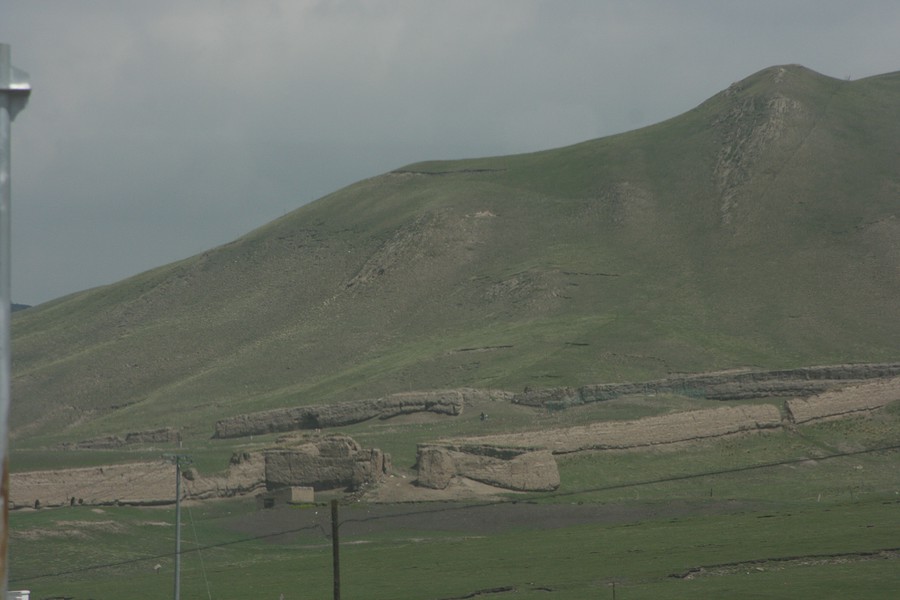
Oh and also we stopped at a small village that is along the Silk Road: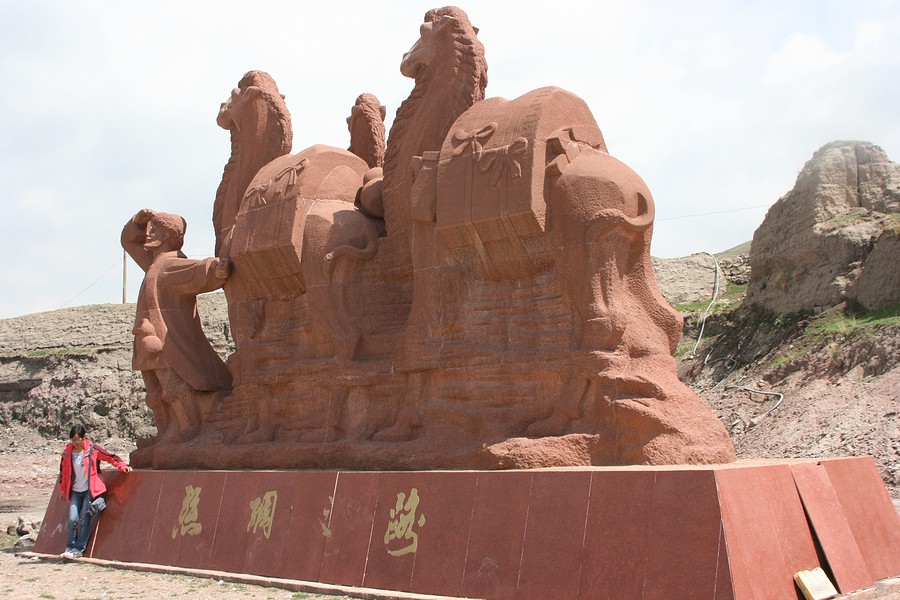
That was our tour of this part of the Qinghai-Tibetan Plateau. Our next destination is Lhasa, Tibet! We will be taking the train from Xining to Lhasa. This ride is supposed to have amazing scenery, and how could it not seeing as we go through some of the largest mountain ranges in the world? It’s likely we won’t have any internet for a while after we leave here, but I’ll write the posts as I can and publish them when we have internet again! Until next time!
Update: Ziqin wanted me to add that she did have some altitude sickness problems when we were up around 13,000 feet, but drinking water and this glucose drink seemed to help her just fine and she hasn’t had any further problems.
Oh, a side note, throughout this trip I have taken pictures using a Canon Rebel Xti
camera, though it is a bit dated. Newer models of this camera can be found at Canon Rebel series cameras

for that area. In China I only pay about 35 RMB (about $5 or $6 USD) a month for my cell service (that gets me 1.25 GB of data and I don’t know how many minutes or texts, but more than I use).